In discussing his own addiction to opioids with the Twin Cities Pioneer Press a few months after Prince’s untimely painkiller-related death in 2016, Gary Louris confessed to its having brought him to the realization — following the band’s brief, unfortunate reunion and quick re-divorce from former collaborator Mark Olsen — that he already had “the greatest band I’d ever want to play this music” and was “lucky to have them.” As he went on to explain,
All my life, I always felt the grass was greener on the other side, whether it was relationships or my career. Everybody else always had something I didn’t have, and if I just had that, I’d be happy. But one thing you learn after you have the clarity is to appreciate what you have.1
It’s hard not to see Back Roads and Abandoned Motels, released July 13 by Legacy Recordings, as a conscious, public statement of appreciation by Louris to his longtime bandmates. Rather than relegating them to their accustomed back-line roles, Back Roads proudly showcases the other band members’ ample talents for realizing Louris’ haunting melodies and layered harmonic concepts. Louris’ appreciation begins right off the bat by showcasing Karen Grotberg’s considerable vocal talents on “Come Cry to Me.” Graced by a full set of horns (saxophones, trumpet AND trombone) manned by David Ralicke, Grotberg affectingly belts out this heartfelt tune of risk and resurrection to stunning effect:
You know how to fly on the wings of disaster/ You try to stand still but you keep going faster and faster/ You thought it’d be easy in California /The tables will turn and they won’t even warn you
Grotberg takes another lead (and harmony) vocal turn on “El Dorado” a bit later, while drummer Tim O’Reagan, who previously assumed lead vocal duties sporadically on previous Jayhawks albums, is likewise afforded more front-of- stage exposure here. O’Reagan’s fine grit sandpaper-scratched tenor and occasionally Dylanesque delivery work nicely on “Gonna Be a Darkness” and give the wistful “Long Time Ago” an apt tinge of world-weariness.
Though Louris penned most of the tunes on Back Roads with and for other artists (including The Dixie Chicks’ Natalie Maines, Martie Maguire, and Emily Robison, Tonic’s Emerson Hart, ex-Sugarland singer Kristen Hall, studio ace Scott Thomas, Bronx-based songwriter Ari Hest and Jakob Dylan), the Jayhawks’ versions nevertheless feel completely lived-in and definitive. This is largely thanks to co-producers Louris, John Jackson and Ed Ackerson, who instill cohesiveness by applying a consistent set of musical accents — acoustic and slide guitars, mandolin or violin, piano and Louris’ temolo- and chorus-laden
electric guitar modulations — across their alternately simple and lush arrangements of this diverse collection of tunes.
Particularly compelling, along with the tunes mentioned above, are the anthemic, Irish sea shanty-ish “Bitter End,” the lovely “Backwards Women” with its multipart harmonies on the catchy chorus and bridge, the yearning “Need You Tonight,” featuring lovely harmonies by Grotberg, and the quiet, finger- picked “Bird Never Flies,” with its lifting refrain (“I won’t give you up”) buoyed by pillowy backing vocals by Grotberg, O’Reagan and Louris.
Like a clean-up hitter in baseball, Louris sweeps in to clear the bases on the album’s final two tunes: the mid-tempo “Carry You to Safety,” with its sweet, lullaby-like chorus (“Don’t be afraid when the waves get too tall / Or when it’s cold and the snow starts to fall / I’ll be there to carry you to safety”), and the sadly beautiful, piano-laced closer “Leaving Detroit.” That last cut’s starkly heavy, at times cinematic lyrics — “You like it rough, or so you said / I hit you ’til my fingers bled … My wedding ring nicked your chin” — expose a dark, remorseful thread that runs just below the surface of this collection. “You’re already gone, this house ain’t a home / I’ll take the last flight / I’ll stare at my hands, we’ll take our last stand / I’m leaving Detroit,” Louris sings in the chorus, the sadness audibly weighing on him. It’s a devastating tune, and an apt reminder of just how perfectly Louris’ potent songwriting skills and his bandmates’ unique musical talents are mated.
As I am not the first to point out, Malcolm Holcolm is a national treasure.He was sick and in the hospital for the latter part of 2019, but apparently he’s up and around these days. Let’s hope he recovers fully and is able to regale us again with his inimitable songs soon.
To nick the subtitle of a recent collection of essays on Texas songwriters,1 Malcolm Holcombe’s approach to songcraft is “ruthlessly poetic.” Holcombe’s latest, the Marco Giovino-produced Come Hell or High Water (Singular Recordings), marks the 13th in a string of dependably strong collections bearing Holcombe’s distinct, darkly Appalachian imprint.
Featuring Iris DeMent and Greg Brown on vocals and backed by Giovino on drums along with Holcombe’s long-time multi-instrumental accompanist Jared Tyler, High Water showcases Holcombe’s trademark strengths as a songwriter and uniquely expressive vocalist. The arrangements are simple, uncluttered and tasteful, with the aforementioned collaborators providing exquisite sweet-and-sour coloring by turns. Giovino’s steady hand ensures that the supporting cast provides the right accents and never gets in the way of Holcombe’s inimitable, gravel road-evoking voice and percussive finger-picking. DeMent’s plaintive, occasionally breathy soprano harmonies in particular are the perfect complement to Holcombe’s wet baritone rasp, while Tyler’s quietly weeping slide-dobro licks stand out while never crowding the scene.
As always, Holcombe’s songs are peppered with telling details, startling twists of phrase and defiantly fierce moments of truth-telling. The lyrics here are darkly, often bitterly incisive; at times verging on inscrutability, they are always powerfully evocative. Though the openers “Left Alone” and “I Don’t Want to Disappear Anymore” are quieter in tone than many of the other tunes, there’s not a clunker in the bunch, and the best of them are compelling in the classic Holcombe way. Highlights include the bluesy “It Is What It Is,” with its kick-drum breakdowns reminiscent of the Stones’“Satisfaction”; “Old North Side,” featuring Tyler’s soulful slide-dobro and Brown’s rousing accompaniment on the choruses; the mournfully upbeat “Gone By The Ol’ Sunrise”; and the stunning closer, “Torn and Wrinkled.”
High Water includes some scathing socio-political commentary as well. Holcombe condemns the “billionaire barbarians” and “limousine liars” whose “old money drags the poor man down / New Damnation Alley,” lamenting how “Truth takes a whipping like a beaten boy’s screams.” In the mandolin-flecked “Black Bitter Moon,” a Biloxi bartender bitterly watches young men “shove off to the ocean fly up to the sky,” quietly bemoaning that there “ain’t a drop or lick o’ sense in Washington’s mind.” “That old black, bitter moon hangs over my head,” she sighs, “Come hell or high water / Comes the rain and the dread.” “Legal Tender” convicts both “them trailer-meth labs around the corner” that “make all the money” and the “pharmaceuticals that paint the sky” and “fill the cemeteries.” “As best I can tell,” Holcombe laments, “morphine’s legal tender.”
The collection climaxes with a final-four sequence of alternating DeMent and Brown duets (“Brother’s Keeper” and “In the Winter”), followed by the bittersweetly nostalgic “Merry Christmas” (“I never got what I wanted / I never kept what I got”), and the memorably melodic closer “Torn and Wrinkled.” With its wistful litany of lost opportunities and bygone memories — “Forgive me, when I turn away / And I mumble to the floor / The perfect words are gone for sure, / And the mirror’s torn and wrinkled” — the last serves as a powerful, apt closer for this beautifully melancholic collection.
Whether you’re new to Holcombe or a long-time follower, you’ll want to have and hold this one. It can be purchased directly at:
1 Clifford, Craig E. and Craig Hillis, Pickers and Poets: The Ruthlessly Poetic Singer- Songwriters of Texas. College Station, Texas: Texas A&M University Press, 2016.
Brian Henneman and his band of alt-country veterans the Bottle Rockets aren’t “old,” but they’ve been around long enough to see the futuristic prognostications of their youth fail to come to pass, or do so in unexpected ways. As the rousing title-track opener, of their 13th album, released by Bloodshot Records on Oct. 12, puts it: “In our technicolor childhood / We burned incandescent dreams / illuminating all these future things / that didn’t turn out like we thought they would.”
Bit Logic is that kind of reckoning: a mature artist’s ruminations and occasional exclamations on the good, bad and ugly of our weird, hyper-technologically inflected 21st-century situation. It’s a strange, transitional time marked by science that “ain’t no fiction,” debates with jaded waitresses about “cell phone selfie vanity” that get interrupted by (you guessed it) technology, and Highway 70 traffic jams featuring an odd mix of farmer’s trailers, Nissan SUV’s, and speeding cop cars, where “every big rig bus and Kia” has “got their own idea.”
In this brave new-old world where our scratchy-and-muddy but strangely comforting “Lo-Fi” ways keep getting replaced with challenging “new way[s] of keepin’ it real,” the information overload is so daunting that, as Henneman bemoans in his dark “Doomsday Letter,” “Whatever I can do to keep my chin up is a damn good thing.”
Amidst the disquieting cacophony — topped by the constant bombardment of shrill screeds from “chicken little,” bile-spewing soothsayers — it takes a constant, conscious effort to remain alert to those rare, passing moments of beauty and truth, like the one noted in “Human Perfection”: “Heard a ballgame on the radio In the background playin’ low Crack of the bat and the crowd went wild Looked at my wife and she just smiled Forgot about the damned election Replaced with human perfection.”
For Henneman, such sanity-saving openness is serviced by regular jaunts to old school honky-tonks like “Stovall’s Grove,” along with daily writing sessions in his closet-sized songwriting room in the attic — aka, his “psychiatrist/treehouse composite” (“Knotty Pine”). Such respites can help you keep your wits and perspective about you, he wisely observes.
And if the cultivation of said perspective doesn’t come to fruition on this particular day, the wisdom gained from sticking around reminds him (in “Maybe Tomorrow”) that time’s passage just might save the day — though ironically, Henneman strung together this bouncy pop-blues tune from the hashtags he appended to an Instagram post at the end of a failed songwriting session. One must remain alert to serendipitous messages that fall from the evening’s sky, after all — whatever technology gets ’em delivered.
As for making a remunerative living from music these days — or at least enough of one to be able to cover the unexpected HVAC and car repair bills — well… it probably ain’t gonna happen. As Henneman notes in the wry, Eric Ambel-prompted rocker, Bad Time to be An Outlaw: “ That Nashville pop it ain’t my deal Even though the cash’s real But these days “What Would Waylon Do?” Don’t make much money sad but true It’s a bad time to be an outlaw.“
Luckily, the enforced poverty hasn’t (yet) prompted the Bottle Rockets to abandon their almost three-decades-long musical adventure. It’s just shifted their focus to the modest rewards of having a decent-sized fan base and a label that believes in them — not to mention most importantly, being able to write some goddamn good songs that actually mean something to people. “Some things don’t need correction,” as Henneman rightly asserts.
In the end, through benign neglect of the naysayers, a humble awareness of your own limitations and mortality, and the constancy of beloved fellow travelers (as detailed in the lovely “Silver Ring”), it all comes out OK. That’s the survivor’s view from maturity, y’all: having pondered the accumulated bumps & bruises, you’re left with a kind of quiet wisdom and more than a bit of bemusement. On Bit Logic, Henneman and team hit that bent nail firmly on the head.
Bloodshot Records graciously gave me the opportunity to talk to Brian Henneman of the Bottle Rockets during a break in their touring for their latest album, Bit Logic, which I loved. I’d been a fan of Henneman’s and the Bottle Rockets for their early days, and had chatted with him a couple of times previously after BR shows in the Philly area.
For this interview I asked him about the band’s production process and working with Eric Ambel, their deep level of collaboration, Henneman’s songwriting process and how it had evolved over his career, and some of the songs on the new album. It was the first piece of mine that Americana Highways was kind enough to publish.
MM: Eric “Roscoe” Ambel is your album producer, and on his website, he wrote that: “The band wanted to get a little more ‘country’ for this one and that means Bottle Rockets Country, not Wardrobe Country.” What did he mean by that?
BH: Well, some people do country just so they can wear the uniform. (laughs)
MM: Roscoe also said that, just like with South Broadway Athletic Club, you recorded Bit Logic “one song a day” at Sawhorse Studios in St. Louis and then he mixed it in Brooklyn. He goes on to say: “Every member of the band made big contributions on the record and we kept it ‘in house,’ with just Brian, Mark, Keith and John and I playing on it.” Can you talk a bit about how Roscoe influenced or shaped the songs and some of the new sounds on Bit Logic? Was that a democratic process?
BH: We’ve worked with Eric for so long and with such good results that we kind of defer to him. Because there’s four of us, we can go a million ways with everything, and so we listen to what he has to say. He has ideas and they’re pretty much always good ideas. So it’s a relief to have him around to say, “Try it this way.” Eric thinks way far down the line in the recording process. He will say things like, “Let’s put a single snare smack — right there — and it might sound weird now, but the compressor is going to do “this” to it in mastering.” So he’s thinking of all this stuff down the road while we’re still recording the damn song. At first, a few years ago, that was weird. But we went ahead and learned to trust him.
Eric’s contribution is to simplify stuff and it always works out great. There was a lot of simplification on this album, more than usual, especially in the drum department.
He’s been instrumentally involved on at least one song per album, and sometimes more. Like on the last album we had the song “Shape of a Wheel,” and we were recording it on George Harrison’s birthday. So he decided, “Let’s do a bridge, put a George Harrison-style bridge chord change in there.” So it was stuff like that, and he’s always got something.
The whole trick with Eric is knowing how to understand what he’s referencing, like when he says “well let’s do a ‘George thing’ there” and then, if you don’t know what a “George thing” is then it can be kind of a problem. [laughs.] You’ve got to learn the references.
MM: Yeah, well he’s a musical encyclopedia.
BH: Yep.
MM: The album is pretty diverse in terms of its stylistic approaches. “Stovall’s Grove” has kind of a Yayhoos feel to it. And some of the other songs don’t sound like other Bottle Rockets albums. Did you guys talk it through and then flesh it out? Or did he hit you with an idea and you either ran with or not?
BH: What was funny was, on “Stovall’s Grove” we had two ideas. Because we were working off of acoustic demos I made. We never rehearsed any of this album before we recorded it — zero. All this came to light in the studio, one song at a time, one per day.
From the original demo I made, it could have gone a lot of ways — it was just me and a guitar and that was it. And so he was like, “We have two inspirational songs to pattern ‘Stovall’s Grove’ after.” One of them was a total psycho-billy kind of thing. But the other song that he had the idea for, was “9 to 5,” by Dolly Parton.
So that’s what we went with. Yep, check out the intro on “Stovall’s Grove” and think “9 to 5,” and you’ll see.
MM: I love that! [Laughs.] I was also struck by “Doomsday Letter,” which seems to be reacting to all the noxious talking heads and people spewing bile on TV and everywhere you turn. “I turned you off and I found paradise right inside your gloom” is such a great line. I wonder if you can talk about the generation of that song?
BH: That was specifically my break-up song to Facebook. I was having this feeling of depression all the time, and then I finally realized where it was coming from. It was Facebook. Because you can’t get away from it. I mean, if you have friends that keep talking about how terrible things are, and then if you un-follow them and don’t see their stuff, but then your other friends you didn’t un- follow are liking the stuff they’re saying, and then that links you back to more of that stuff — and yeah well, it never goes away, there’s nothing you can do about it.
I loved being on there, I was on there for almost ten years, I had friends I only knew on Facebook, but it was just too weird, man. It’s too weird. Life is too short, you know? I ain’t got enough time left on this earth to be sitting there typing angrily by myself. [Laughs.]
MM: You had a great image for it at the Philly show. You asked us to imagine some guy in the wee hours of the night lit up by the glare of his computer, and he’s getting all upset as he’s responding on all these comment threads going on, and then you said, “And that guy was ME!”
BH: [Laughs.] Yeah, that’s right, that was my life. It’s absolutely the truth!
It wasn’t this past 4th of July, it was the one before that. I deleted the whole thing on the 4th of July, because it was Independence Day, and I decided: “I’m getting out of here!” I always do big things on symbolic days, so I can remember when I did it. I quit drinking booze on New Year’s Eve in 2003; that was the last time I ever drank. I always attach something to it, and so I was like, “July the fourth — what a perfect time, Independence Day! I’m getting free of this stuff.” And everything got better, as soon as I did.
MM: For your sanity, you needed to step away from all the clutter and noise.
BH: Yeah, it’s a personal thing. The older I get, the more I realize that you can’t let that stuff friggin’ waste your time and drag you down.
MM: Another song on the new CD that is getting a lot of attention is “Bad Time to be An Outlaw.” You said that Roscoe prompted you to write that song, that he said, “Let’s take it from a different angle.” Have you ever written a song to order like that before?
BH: I imposed an order on myself with the song “Smoking 100s Alone,” working from a title. I was like, “Okay I gotta make up something that this could be the title for.” But as far as being a straight short-order cook on a song, I think that might have been the first time I ever did that.
AH: It captures the feelings of a lot of people. A lot people were talking about it at the Americana Fest in Nashville last month. People could relate to it, because a lot of them had records coming out and everything, but nobody had any money.
BH: Yeah — ha! [Laughter.]
You know, that’s all it is. I had to think about, “Okay, how can it be a bad time to be an outlaw? You know, how can this be?”
But 2017 was the most expensive year of my adult life. My air conditioning in my house broke, my whole furnace, everything went out — and that’s expensive stuff! My car blew up and then my phone… it’s the true story of what happened.
And then you think about — so, I’m “Mr. Integrity Outlaw Country,” you know, “I’m gonna stick to my guns.” And yes, that’s true, but then you realize that you can become a “fair weather outlaw.” ‘Cause it’s a lot easier when you don’t have financial shit to deal with. And then you start thinking, “What if I had gone to Nashville and become a songwriter and wrote shitty songs?” What would the crime have been there, because now I could pay for my air conditioner! [Laughs.] It was literally about a specific moment in my personal life where it was a bad time to be an “outlaw.”
AH: Yeah, but you know, you’re also speaking for a lot of people when you’re saying this. You know, it’s not just “outlaw,’ it’s the whole music industry right now.
BH: Well the general rule is if it happened to you, it happened to somebody else. So all you have to do is take a real situation and chances are really excellent that a lot of other people have gone through the same thing.
AH: What are your thoughts on labels like “outlaw country” and “Americana”? I met a guy at Americana Fest named Mitch Barrett. He’s been around the scene forever and he went on a spiel about how the labels that we work under have changed — like, first it was “outlaw country,” then came “alt country,” then it was “roots,” and now it’s “Americana.” And he says to me, “Isn’t all this what we used to call folk music?” [Laughter.] I thought that was a great take on it.
BH: Well in my era it was all rock ‘n roll music. When I was a teenager you put on a rock ‘n roll station and you could hear everything from the Charlie Daniels Band to Black Sabbath on that same station.
That was before they subdivided everything, which is how it is these days. And it’s especially significant on the internet, where we’re searching through everything in the world. You go into a record store looking for stuff, and there’s X amount of things you can look at. There’s a ridiculous amount of things you can look at. I mean you’re looking at everything there is.
AH: So you think having the adjective “outlaw country” does help things, by narrowing down what you’re gonna get when you go down that particular aisle or category?
BH: Yeah. It helps you get a feel for what you’re looking for. You’ll get a sense from that label, if what you’re looking for is not modern “pop country.” It directs you right away. You can’t just put “country” because then anything could happen. [Laughs.]
AH: You have that line in “Bad Time to Be An Outlaw,” “Carrie Underwood doesn’t make country sound.” I listened to Carrie Underwood’s new hit song, “Cry Pretty,” and I can imagine it being done by you and the Bottle Rockets with a totally different production — get Eric Ambel in there, and it could be great.
So would you say the problem with pop country is not really the songwriting but everything around it — the over-production, the marketing — and the way that all works? Really, that’s kind of what makes it seem — to go back to the idea of some people thinking that “outlaw country” is more real somehow. It’s all that other stuff that makes whatever’s real in it seem plastic.
BH: Well yeah, and you know “country” is an abstract idea in the year twenty-eighteen anyway. Because really, what is country anymore?
It’s like everybody’s got a damn cell phone, everybody’s looking at the same stuff, you know. It’s like colloquialism is dead. We’ve all got a thing in our pocket that will wake us up, with everything there is to know about on it. Everybody’s got it. So “country” ain’t what it used to be. [Laughs.]
AH: Well, I knew that the moment I heard The Gourds’ version of that Snoop Dogg song —
BH: Yeah, “Gin and Juice.”
AH: — yeah, and when I heard that it was like, “damn, anything goes!”
BH: Yep, it’s true. My great realization-moment like that was a few years back we were on the road, way out in the sticks, and we had to get gas. So we pulled into this little gas station that was this tiny small-town gas station — you know, “live bait” out front, the whole bit, just classic country stuff.
And in the parking lot was a girl sitting on the tailgate of her pick-up truck, and blasting out of the pick-up truck was Lady Gaga! So there you are. What is “country” when you get this far out in the country, as far as you can get, and there’s Lady Gaga blasting through the parking lot?
AH: Bit Logic really captures the contradictions of our particular moment, with the theme of technology running through it all. The details in the songs feel very real.
One of the other songs that I wanted to ask you about was “Maybe Tomorrow.” You wrote that one from some hashtags on Instagram, right?
BH: Yep.
AH: A lot of people in the audience, when you said that in Philly, were like, “Are you serious? Did he really do that, is that true? How exactly did he —“
BH: Yeah, yeah — it’s absolutely true!
AH: How many hashtags in did you realize, “Hey man, there’s some lyrics to a song here”?
BH: It was not far, because it was stuff like, “#maybeTomorrow” was one of the hashtags, as far as “giving up” goes. And like, #Can’tWin,” #AintGonnaPlay” — stuff like that. And then I was like, “Holy cow, there’s the friggin’ song, right there!” [Laughs.]
AH: That’s so perfect, especially given the album that it’s on. It encapsulates both the craziness and the potential of technology.
BH: It’s a continual conundrum. If you’re a certain age, which I am, it’s like, “Ugh, this is just crazy, this whole thing is insane.” But both good and bad come from it. And there isn’t anything on the album that’s knocking or judging any of it, it’s just — living with it.
AH: Yeah, there’s that lyrical dialogue with the waitress in “Lo Fi,” on technology, where you conclude that it’s just a “new way of keeping things real.”
BH: Yup.
AH: There is an openness to things on this album. Is that a sign of your evolution as a songwriter? Some of the earlier Bottle Rockets songs feel more strident and they make things seem more black and white; songs like “Wave That Flag,” “$1000 Dollar Car,” and “Indianapolis.” They all have a similar voice but maybe not the same attitude as the new ones.
BH: Yeah well, that’s growing up. One of the few perks of old age is wisdom! [Laughter.] You gotta appreciate what few perks you get, and the more you live, the more you see, the more you realize that things aren’t all black and white all the time. So the natural by-product of getting old, is the evolution of the songwriting.
AH: That’s a nice way to put it. On this album you really pay a lot of attention to the “everyday things” around you. You talk about HVAC [systems], and baseball games on the radio, and traffic jams, and Nissan SUVs and Kia’s…
BH: Yeah.
AH: … and all that knotty pine paneling. Are you consciously using those details to put us in the room, with all its contradictions — ?
BH: I’m simply telling the story. It’s like looking at the picture and explaining what’s in it for other people, saying: “Okay, here you go.” When you’re making music you’re basically explaining things to somebody who can’t see what’s going on, because it’s music, you can’t see it. So the song is a description.
AH: I think of the old fiction writers’ motto, “Show, don’t tell.” On this record you’re doing a lot more showing, and standing back and saying, “This is what I’m seeing in front of me,” and resisting telling the listeners what to think or feel about it.
BH: It’s a bad idea to tell people what to do. [Laughter] People don’t like that!
AH: You have this really distinct voice as a writer. In every review I see they mention at some point how you have this earthy, direct, straight-talk, workingman’s point of view. Is that just you? Or is it a persona that you’re working with, telling the story through?
BH: No, no persona whatsoever — that’s just how it is.
AH: Well, it makes the songs very real and appealing because everybody can relate to the situations that you describe.
BH: I probably don’t write as many songs as a songwriter should, because I don’t do fiction. I don’t make nothin’ up, it’s all real true stuff. And there’s only so much that goes on, that’s worthy of singing about. Some people sit down and diligently write a song, and if they have to make up the story, they make it up. And there are people that are really great at that. But that ain’t me, I don’t do that.
AH: At the same time, from the lyrics of “Knotty Pine” it sounds like you do at least have your little six by ten foot retreat. I love the line describing it as like a “composite psychiatrist’s office slash treehouse”!
BH: Yeah, that’s what it is. You know what’s funny about that room? I rarely use it for songwriting. That’s what it’s there for. But rarely do I go there with the intention of doing that. Most songs are written in my head while mowing the grass or driving or whatever. And that’s the truth. I’ve gotten more results from mowing the lawn than from anything else!
AH: How do you capture something you’ve got going through your head? Do you use apps to record those ideas?
BH: I grab a guitar and flow it into voice memos. Then if I want to send it to the other guys I can just do it — BOOM! — one click, and I mail it right to them. It never really gets any more detailed than that system — it’s just a guitar and a vocal, and that’s it.
AH: At that point do Mark or John or Keith write right back? Or is it sitting there in the vault, so you can access it later and then flesh it out?
BH: Well, they’ll hear it and put it in their pipes and smoke it. And then we’ll get together and everybody has an idea, and then if we record, Roscoe has an idea to add and then they develop organically like that. I take the quickest little sonogram of the baby [laughs], and then we’ll work on it as it comes — that’s what everybody’s there for, to add input to it.
AH: You are very collaborative.
BH: Yes, it’s always started as basic chords and lyrics and that’s it. And then everybody else brings the rest to the table. Because there’s no sense in coming up with something, as if you think you know exactly how every part should go. Because you know, I’m not a drummer, I don’t know how every part should go. I’m interested to see what the drums do to whatever I made up. And they can take it quite different places. I’m not that guy, I don’t have everything figured out in advance, I don’t know what the bass should do. I have no idea — Keith knows what the bass should do there. So, I let everybody bring what they can bring.
AH: The other song I wanted to ask you about is the last song on the album “Silver Ring”, which surprised me because it is so pared-down and direct, it’s beautiful.
BH: Mark wrote the lyrics to that one and then I put the music to it. I did a little editing, took a few things out, and repeated a couple lines. So I was an editor and brought the music. But he had the sentiment and the idea and we all liked it.
AH: Is he the one that wears a silver ring? [Laughs.]
BH: Yup, apparently so. But you know, I do too. So I can relate to it.
AH: Uncle Tupelo’s Anodyne just turned twenty-five, and Rolling Stone had a write-up on it in which they mentioned that you were their guitar tech. And you also played guitar on a bunch of their songs. Is there anything that you gleaned or learned about songwriting from hanging around Jeff [Tweedy] and Jay [Farrar]? Or any other kinds of memorable takeaways you had from that experience?
BH: The thing I learned from those guys, especially the first time I ever heard this song, “Gun,” that Jeff wrote — is that you’ve got to write good songs. Because they always did cover songs in their sets back in those days, too, and they were one of the few bands where their own songs were as good as whatever cover songs they picked. I couldn’t tell the difference. And especially with “Gun.” I thought that was somebody else’s song!
I was impressed that they had written a song that I thought was somebody else’s. And so that kind of stuck: Make sure your stuff stands up to stuff that you like, to the stuff that other people you know and respect did. Be universally impressive. And if you can be as good as people you respect — if you like it as much as you like, the Rolling Stones’ song or whoever’s song — then there you go, you did the best you can do.
AH: Well, that sounds like the perfect kind of touchstone to carry away. Good luck with the rest of the tour, and I hope the album keeps doing good, and keeps getting to be number one, two, and three on the Outlaw chart.
BH: Yeah, whatever that is, the “Outlaw chart” — which is like some thing in some dude’s telephone, in his pocket. I don’t know what that is! [Laughter.]
I bought this CD in a Bay Area record store around Christmas of ’93 (it came out in October) and was absolutely obsessed with it for a good year – maybe longer. I’d just moved to Seattle and grunge was all the rage, but I found the country-tinged songs on this CD (like the title track, High Water and We’ve Been Had) every bit as compelling as the all-out rockers (like The Long Cut and Chickamauga).
Suffice to say, I wouldn’t be writing & playing the Mack Hooligan stuff I am today if it hadn’t been for Uncle Tupelo (and a bit later, Blue Mountain and Whiskeytown). They sure as hell beat the hell out of all that crap by that Eagles I had to listen to while growing up & going to college in Arizona and southern Cal! I’ll still take Belleville, Illinois, Oxford, Mississippi, and Apex, North Carolina over f*cking “Hotel California” any day.
I’ve never really understood why anyone would want to approach songwriting competitively — but aside from that assumption, this post by Brent Baxter on the Nashville Songwriters Association International blog has some helpful pointers:
I’m delighted to share a couple of big pieces of news with y’all. The first is that as of today, two new original songs of mine that the estimable John Faye recorded, mixed and played on — and that our good buddy Cliff Hillis was kind enough to master in record time — are now available to stream and/or download on all the big distribution platforms (e.g., Amazon Music, Deezer, Google Play, iTunes and Spotify, among others). Just search for “Mack Hooligan” and they should come right up.
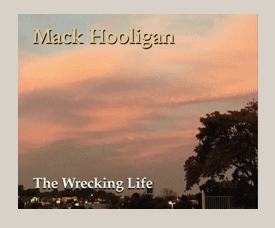
My previous 3-song EP “The Wrecking Life,” which was recorded, mixed, mastered and produced by Cliff Hillis in January 2017 and which features such talented musicians as John Short III (aka, “Shorty”), John Faye, Tom Curtis Jr. and Cliff, will be available on those same platforms within a few days.
The other big bit of news is that I’m headin’ down to Nashville in a couple of days to take in the 5 days of non-stop musical glory known as the AmericanaFest. I’ll be bringing branded USBs stuffed with the aforementioned songs in the hopes of hawking my songwriting talents and perhaps hooking up with some future co-writers down there.
I’m pretty excited about these next steps for my fledgling musical career. Hit me up the next time you see me at a gig or open mic and I’ll be happy to share what I learn in Nashville. Whatever happens, I’m grateful and humbled to have had these opportunities come my way, and can’t thank John Faye, Cliff and Shorty enough for helping to make them possible.
I write because: a) I think I’ve got something to say, and b) I like the creative challenge of trying to find new & unique ways to say it. I’m not sure anyone else would ever want to perform my songs since they’re so rooted in my eccentric personality, so I don’t even really think about that. But I DO like the idea of performing & recording my own songs, if only to get them out there for a few people to hear. Who knows, something in one of them just might strike a deep chord in a listener and help them out in some way, — or just give them a moment’s pleasure. Just gotta stay humble and keep working at it…


 Mack's Musings