My newly released 5-song EP, Hooligan Blues, is now available on Bandcamp. You can check it out at https://mackhooligan.bandcamp.com/album/hooligan-blues .
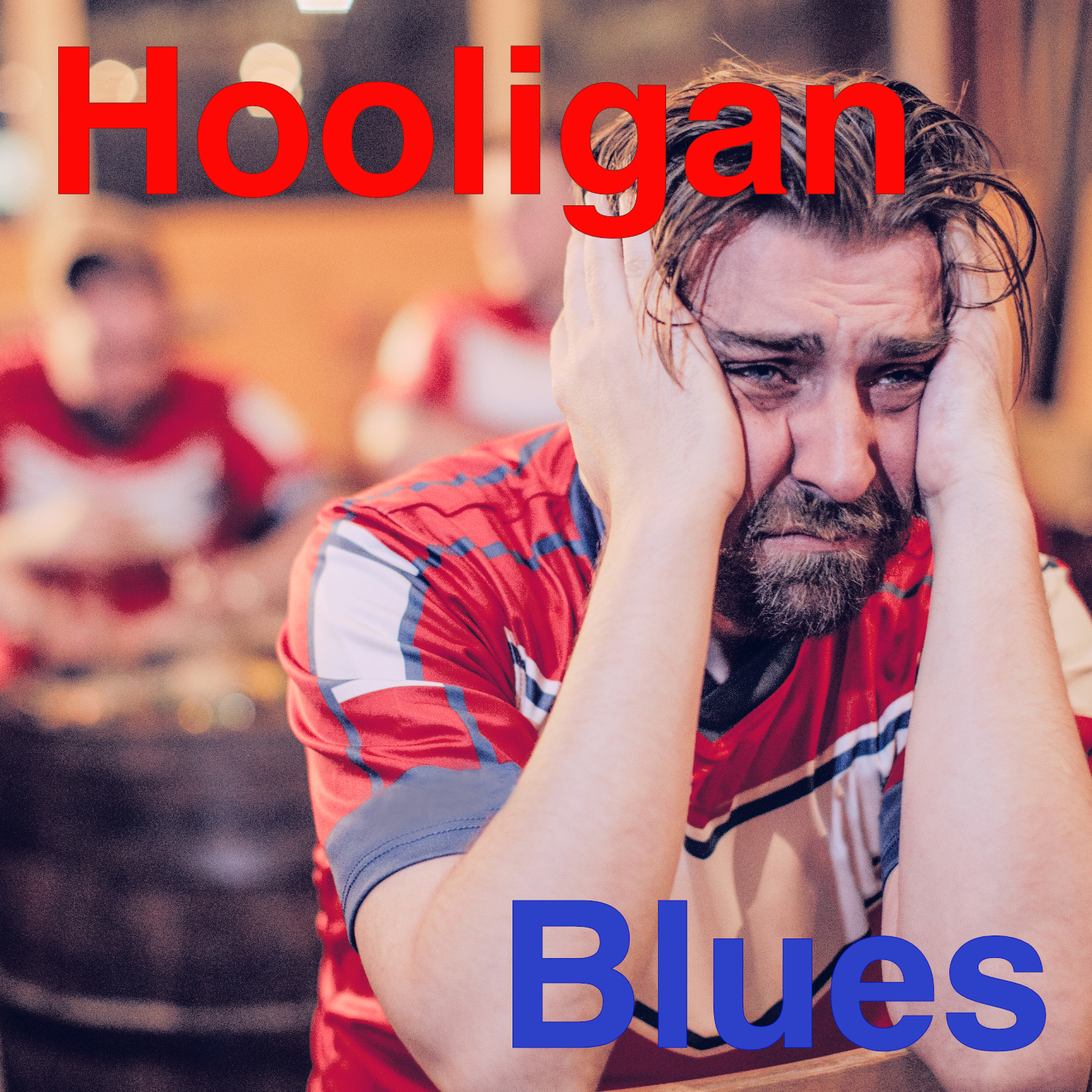
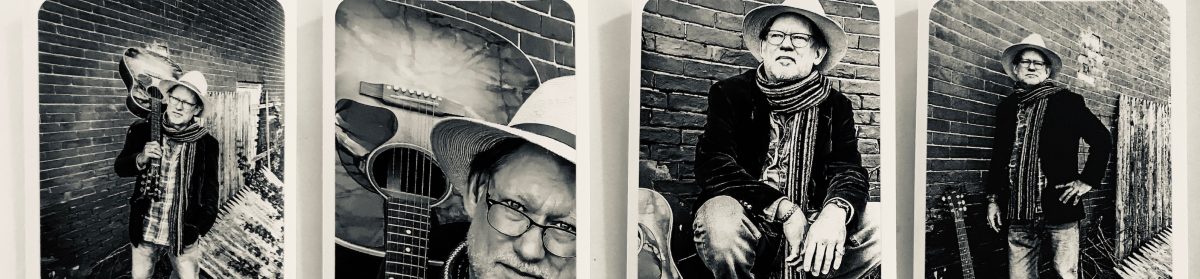
My newly released 5-song EP, Hooligan Blues, is now available on Bandcamp. You can check it out at https://mackhooligan.bandcamp.com/album/hooligan-blues .
For links to all things Mack Hooligan, see my Linktr.ee page.
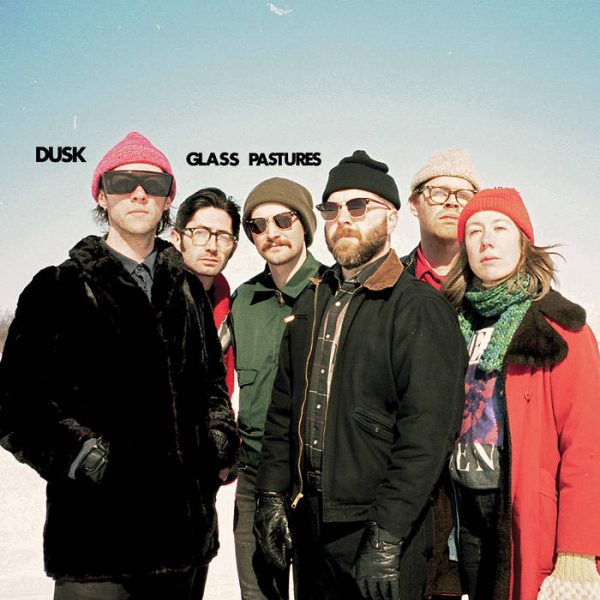
Here’s a link to my latest CD review, of the band Dusk’s album Glass Pastures. The review was published by Americana Highways on January 22, 2024 under the title “On Glass Pastures, Dusk Nails the Formula Without Sounding Formulaic.” I really enjoyed this album and am guessing you will too.
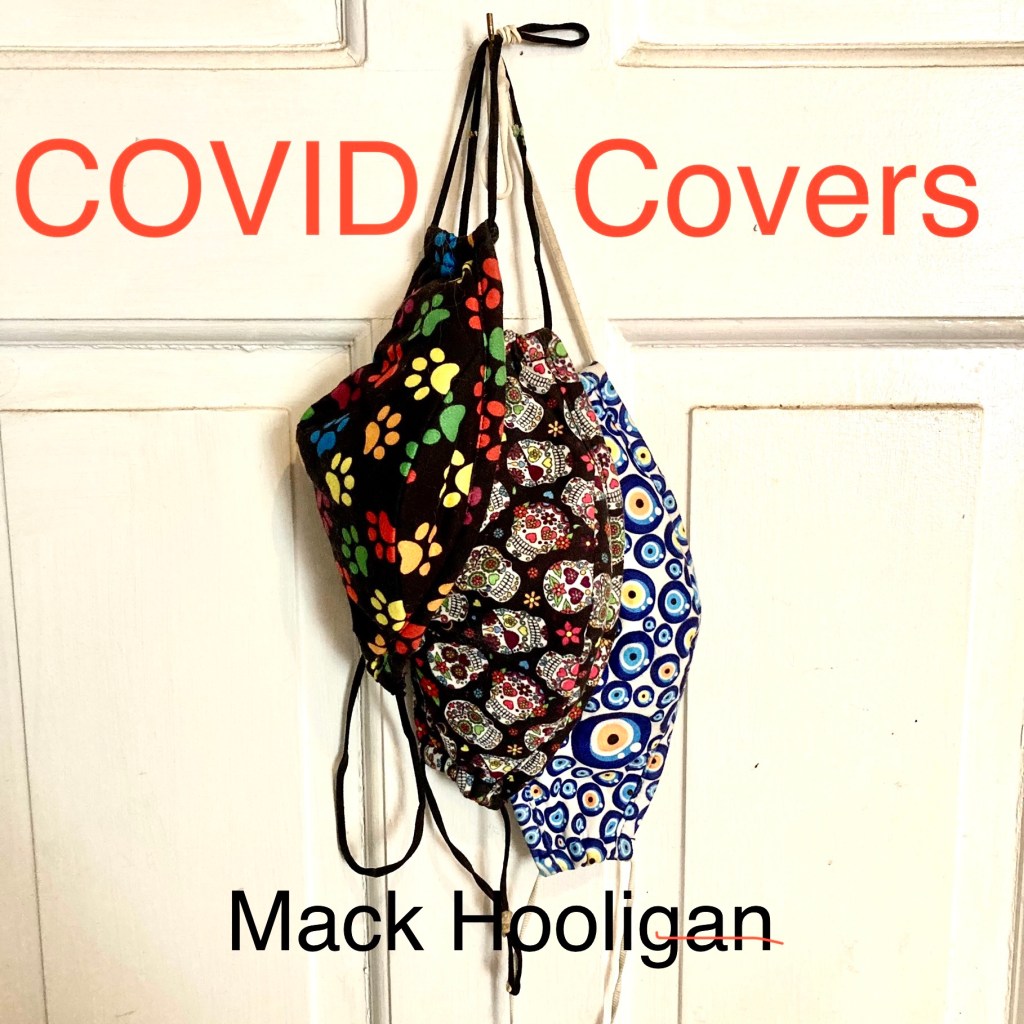
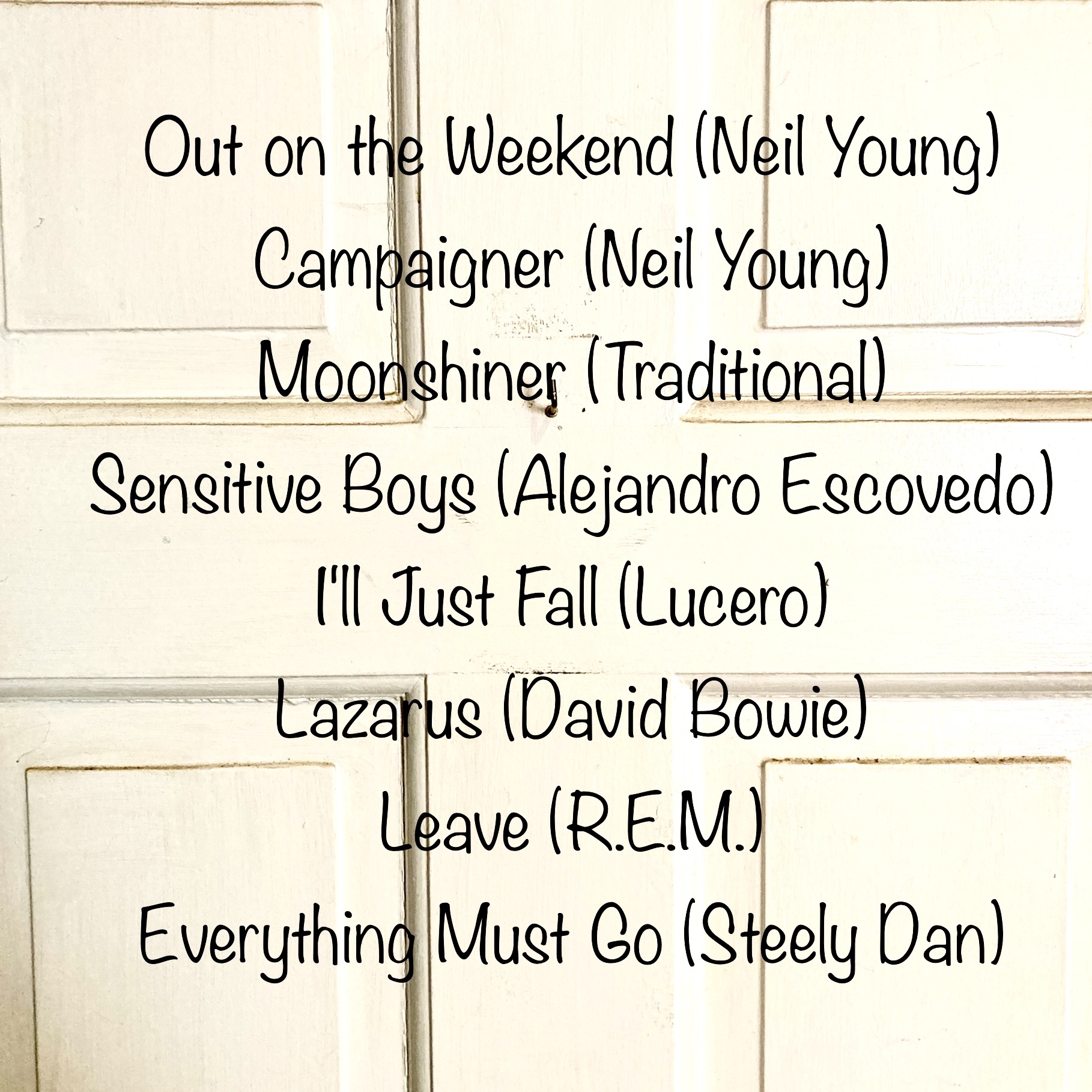
Since I wasn’t able to perform much in 2021 due to COVID, I decided to hone my musicianship — with particular emphasis on developing my skills on drums, bass and lap steel — and dive deeper into digital recording technologies by tackling some cover songs by a few of my favorite artists. The result is an oddly eclectic and sometimes uneven collection of recordings, but one that I really enjoyed developing. I’m sharing them to document the learning process, with all its highs and lows, and in the hope that you find a few tidbits that delight and/or surprise.
Below are links to the audio files. They will open in the web-based version of Dropbox, where you can either download them or listen to them using the Dropbox audio player. You can also right-click and select “Download linked file” to download it directly without opening Dropbox.
If you want me to send you a ZIP file containing the whole bunch, just let me know.
A NOTE ON COPYRIGHT AND ROYALTY ISSUES
I’m not violating any copyright laws by sharing these recordings since I’m not releasing them publicly via any streaming sites or other formal distribution methods (e.g., CDs) and most importantly I’m not selling them. To help me maintain their “fair use” status, please don’t circulate or sell these files in any way — if you do so I could get tracked down by the royalty police! ;^>
For more info on these tunes, like why I chose them and what went into my arrangements & approaches to recording them, just scroll down past the song links.
“Out on the Weekend” (Neil Young)
I have a bit of a love-hate relationship with Neil Young. While I’ve performed several of his tunes since I was a teenager (when I played his triple-album Decade obsessively), I find a lot of his later work pretty ragged and not at all glorious, if you get the reference. Plus I can’t stand his voice. So when people tell me, thinking it’s a compliment, that I sound “just like him,” I’m not too pleased to hear it.
You can’t deny that Young is a prolific and interesting — by which I mean, quirky in a compelling way — songwriter. “Out on the Weekend” is a bouncy number that leads off his 1972 breakthrough album, Harvest, while “Campaigner” is an unexpected low-key dirge that he snuck onto the aforementioned Decade compilation. I followed Young’s lead on both songs by recording “Out on the Weekend” with full guitars, drums, bass and lap steel, and “Campaigner” in one lo-fi take with just guitar and vocals.
I discovered this tune through Uncle Tupelo’s awesome version of it, and then learned that it’s been covered by TONS of people over the years, including Delia Murphy, The Clancy Brothers, Bob Dylan, Elliot Smith, Cat Power and many others. Its author is unknown, and some people claim it was originally an Irish tune that was transported to Appalachia while others claim the exact opposite. The first known recording of it, by the Combs family of Kentucky, was featured on the poet Carl Sandberg’s 1927 collection The American Songbag, crediting its minor key arrangement to Alfred George Wathall.
I followed Uncle Tupelo’s lead for the most part by starting out acoustic and then adding drums, bass and electric guitars later on to ramp things up. I stuck a long reverb effect on the harmonica to make it sound like I was playing it in a deep dark cavern. I’m especially pleased with how the bridge’s dueling harmonica and electric guitar lines came out. The slide I played on a dobro guitar towards the end seems like the right touch for this gloomy, mortality-conscious tune.
“Sensitive Boys” (Alejandro Escovedo)
I’ve always loved Alejandro Escovedo’s songwriting and was thrilled when I got to see him play with his band at a smallish bar in Nashville for the 2019 AmericanaFest. He co-wrote this one with another favorite songwriter of mine, Chuck Prophet, who was briefly a member of Escovedo’s touring band at the time, which was named — appropriately enough — The Sensitive Boys.
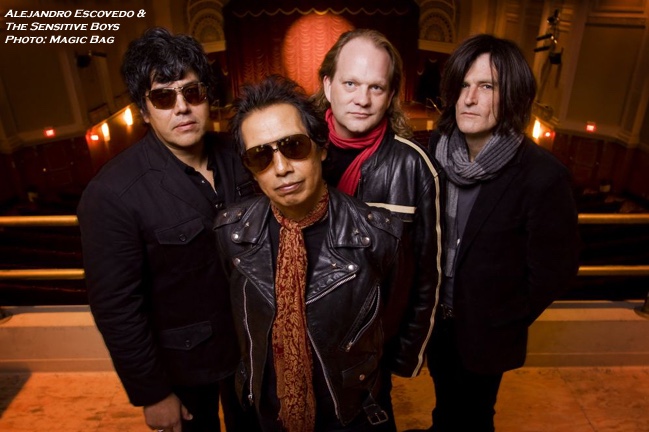
I kept things mostly simple on this arrangement too, though I added some echo, reverb and fuzz effects to the electric guitars to give the song a bit more texture. I also threw in a synthesized Hammond B-3 organ and some orchestral strings (also synthetic) towards the end. Unfortunately the drums are off in a few places (like at the start), but I’m mostly pleased how with this recording of Escovedo’s lovely tune turned out.
If you know me well you probably know what a huge fan I am of the Memphis-based Americana band Lucero. Their main songwriter, Ben Nichols, writes tunes that are about as earthy and heartfelt — yet sneakily literary — as you can get. I loved “I’ll Just Fall” from the first time I heard it and have been playing it for a while now.
This arrangement is also about as simple as it gets: just me singing along with my Gibson J-45 rhythm guitar and an over-dubbed acoustic lead guitar. I recorded it on a whim one day using the GarageBand app on my iPad, intending to use it as a scratch track for a more full-blown recording later on. But I like the feel of this “demo” version so much that I’m including it here, background static and all.
Talk about moving to the other end of the spectrum! For this David Bowie tune (one of the last ones he released before he died) I went whole-hog on the instrumentation and effects, including everything from an Op-amp fuzz pedal on the lead guitar, to a chorusy echo effect on the rhythm guitar, to several effects and filters on the lap steel guitar. There’s a programmed drum pattern for the opening and ending, live acoustic drums for the rest, and some synthesized organ lines in lieu of Bowie’s amazing saxophone playing on his original version.
Obviously I was going for a dramatic, multi-layered, almost orchestral feel on this one. Doing that while maintaining the tune’s driving, emotional intensity was a real challenge, but I think I mostly managed to pull it off. I love how the bottom sort of drops out at the end, bringing the listener to the brink of non-existence. I’m REALLY happy with how this one came out — and my drum teacher was too!
This is a lesser-known R.E.M. tune off their late, under-appreciated album New Adventures in Hi-Fi. It’s a desperate song that calls for desperate measures recording-wise, to capture Michael Stipe’s “it’s the end of the world and I like it” gloom-and-doom lyrics. Seriously: in the refrain Stipe sings yearningly about how much he wants to “leave it all behind” — can you get any more depressed than that?
And yet, the song is a head-on rocker, musically. I decided to “go big” on this one too, by layering multiple fuzzed-out guitars and featuring a loop that I created by applying a reverse reverb to a simple acoustic guitar riff. I also employed the 80s production trick of adding lots of reverb and adjusting the EQ to accentuate the low-end, thereby making the drums sound huge in the mix. Even if you have no idea what those technical details mean, I hope you like the end product as much as I do.
“Everything Must Go” (Steely Dan)
Last but not least and most challenging of all for a variety of reasons, is this Steely Dan tune, the title track off their final studio album. For this one I really had to up my musicianship in order to play the Dan’s complicated jazz chords, utilize a wah-wah pedal for the rhythm guitar, and master those funky bass lines. And the vocal phrasing…. how could I possibly capture Donald Fagan’s incomparably tongue-in-cheek delivery on this one?
I think I did an OK but not great job on the vocals, after cutting & pasting snippets from a million different takes. I’m more happy with some of the fun details I snuck in, like the synthesized organ riffs, megaphoned backing vocals, sleigh bells and triangle taps, to give the tune a cheerfully off-kilter vibe. I think my version respects the overall feel of the original while adding a bit of extra flavoring. I’d love to know what you think of it!
My drum teacher, Dave Indivero, suggested I learn this tune for one of my lessons. I liked it so much that I decided to record a full version with guitars, bass, backing vocals, etc. I’m pretty happy with how it all worked out, so I figured I’d include it here as a bonus track. Enjoy!
Thanks so much for listening. I hope you enjoy these home basement-recorded efforts of mine. If nothing else, they kept me from going completely nuts during the Great COVID Depression of 2021.
Hope to see you soon!
Sometime in the future we’ll look back on 2020 and ask each other, “What did you do to get through the pandemic?” I recorded a bunch of very sad cover songs, including this one by Chuck Prophet.
Hey Hooligans!
I’ve got a simple request for you. Since I can’t get live feedback on my songs by playing out, I’m starting to lose all sense of whether my new tunes are any good or not. That’s where you can help — and it’ll only take a couple of minutes.
Just listen to my latest tune below — a roadhouse blues number in the tradition of John Lee Hooker and RL Burnside called “I Feel Used” — and select one of the three options in the 1-question poll below it to let me know if you think I should:
a) go ahead and release the tune on Spotify, Apple Music, YouTube, etc. (in other words, you think it’s great as-is and needs no further work), or
b) keep refining the tune and/or the recording (you can add specific suggestions via the comments form at the bottom of this page, if you like), or
c) just fahgeddaboud it (because it’s material that would only harm my sterling reputation 😜)
That’s it. Here’s the song:
Thanks for listening and for taking the time to “vote” on this tune. And don’t forget to vote in the upcoming presidential election! Our continuance as a democracy depends on it.
Mack
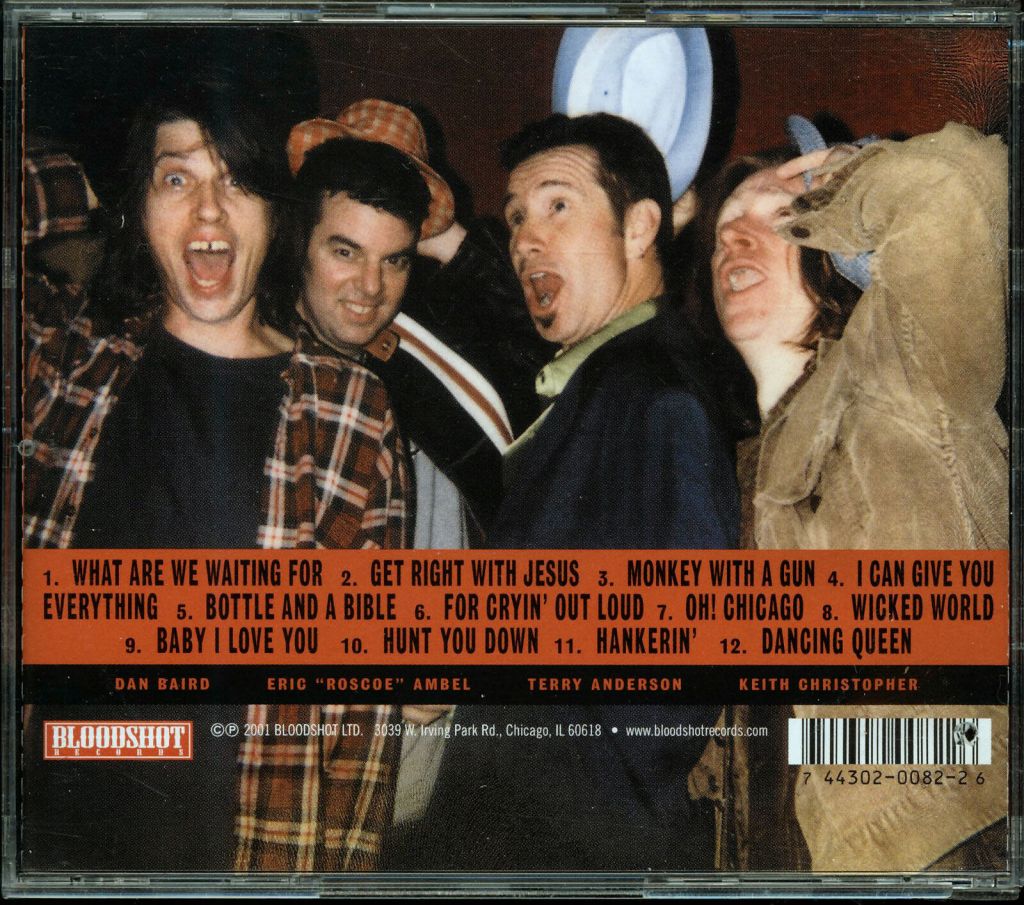

I’ve loved these rowdy roots rockers since I first heard them back in the late 90s and have been playing this particular song for quite a while now. Though I’m not a church-goer, I don’t think you have to be religiously inclined to appreciate the narrator’s tale of struggling to walk that fine line between falling into bad habits (in this case, drinking) and sticking to the straight and narrow.
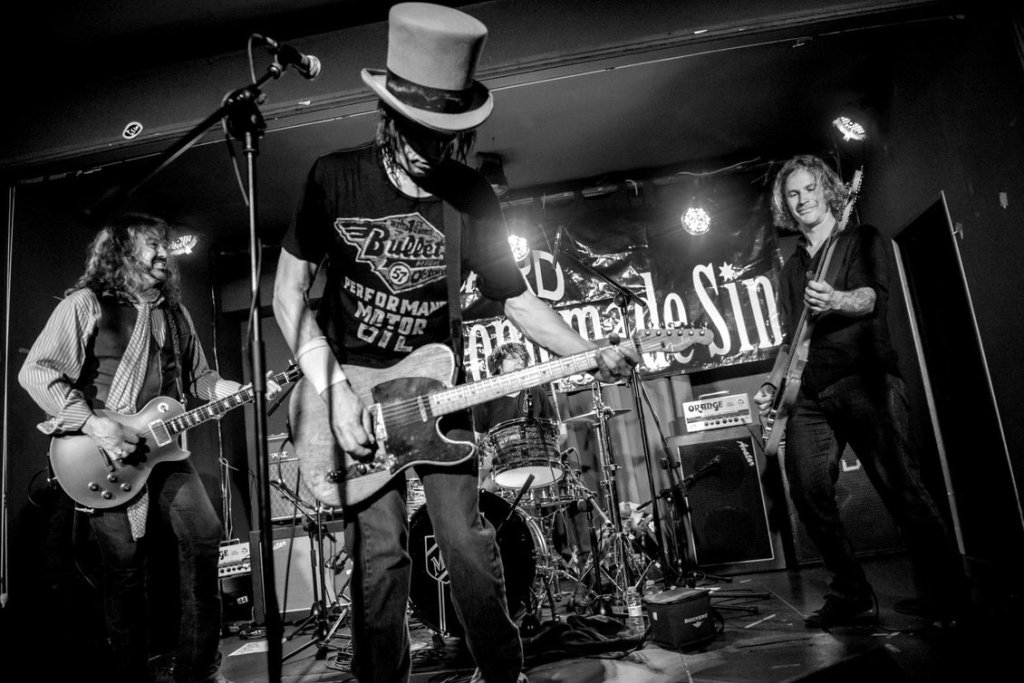
Despite the band name, The Yahoos are anything but a bunch of naive country hicks. In fact, they’re basically a supergroup comprised of genuine roots rock royalty. The band’s most recognizable and well-known member (thanks to a certain live, televised New Year’s Eve performance and a string of over-the-top MTV videos) is Dan Baird, the gap-toothed frontman for Dan Baird & Homemade Sin and, further back, the Georgia Satellites — whose late 80s hit “Keep Your Hands to Yourself” reintroduced hoardes of synthesizer-loving techno-pop and New Wave fans to the rough & ready joys of loud rock ‘n’ roll.
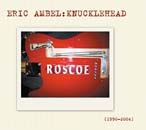
Joining Baird on guitars and vocals is Eric “Roscoe” Ambel, former long-time guitarist for Joan Jett & the Blackhearts as well as an original member of the Del Lords, owner of the Cowboy Technical Services recording studio, and a producer of note in both rock and Americana circles. (A good sampling of his solo work can be found on the 2018 compilation Roscoe Sampler, from Lakeside Lounge Records.)
And then there’s Terry Anderson, the singer-drummer behind the outrageously fun and occasionally unhinged Terry Anderson & the Olympic Ass-Kickin’ Team, as well as Keith Christopher, who has played bass on recordings for everyone from Billy Joe Shaver to Paul Westerberg, Todd Snider and even Richie Havens.
Each of the band members is an accomplished songwriter in his own right, and they all seem to have been weaned on the same high-octane, unabashedly fun-loving brand of brash rock ‘n’ roll mashed with humorously self-mocking tales of woe.
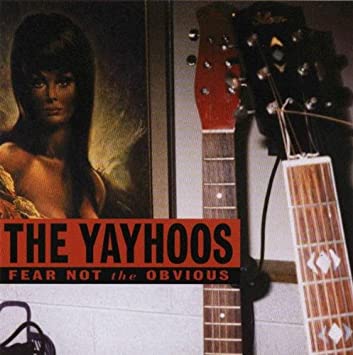
“Bottle and a Bible” falls into that latter category, and was penned by Anderson and Baird, with some musical contributions no doubt by producer/guitarist Ambel. It’s included on their 2001 Bloodshot Records release Fear Not the Obvious, which I highly recommend as a starting point if this band is new to you.
I’m not the only admirer of the songwriting chops displayed on this tune. Another of its fans is none other than quite possibly the greatest songwriter of our time: Bob Dylan. Dylan featured the song on Episode 19 of his “Theme Time Radio Hour,” which was dedicated to the theme of “The Bible” and included songs on that subject by such notables as Kitty Wells, Washington Phillips, Blind Willie Johnson, Laura Cantrell and the Rev. Gary Davis. (You can find the full list of that episode’s singers and songs here.)
Aside from the fact that it bears some melodic resemblance to his own mid-tempo tune “When I Paint My Masterpiece,” I’m guessing Dylan was probably drawn (like me) to the song’s straightforward structure and the naked honesty of its narrator’s voice. The song doesn’t meander or beat around the bush, getting right to the core of the narrator’s internal conflict in the first two lines:
Stopped by the liquor store
On the way to revival
Headin' down the road
With a bottle and a Bible
Before long, the temptation of that bottle starts weighing on the narrator’s mind, and he openly confesses his self-doubts:
Part of me believes,
The other part wonders
If the bottle's gonna win
And take me under
The fact that he manages to make it to the revival and back by relying on nothing but his faith in the Lord comes as something of a surprise, constituting a great relief and quasi-triumph.
I got back home
In the middle of the night
I knew where to go
'Cause I seen the light

And I made good time
'Cause I never stopped
Clear heart and mind,
I never cracked the top!
Like a lot of Dylan’s best songs from, say, the era spanning The Basement Tapes through John Wesley Harding, “Bottle and a Bible” manages to balance a kind of homespun wit with a sense of wonder at the peculiar pickles we humans manage to get ourselves into. There are also allegorical overtones packed into some of the simplest details. The songwriter’s attitude is sympathetic and never mocking, though it’s obvious he also can’t resist cracking a bit of a smile at the protagonist’s self-dramatization of his somewhat banal plight.
As for my approach to recording this great tune: I hewed close to The Yahoos’ arrangement and tried to keep things simple, adding only a couple of minor embellishments. Instead of trying to emulate (which I never could) Ambel’s nimble Telecaster fills and solos, I went with a few homely harmonica wails; and to emphasize the protagonist’s delighted surprise at his safe (and sober) arrival home, I threw in a couple of megaphone-enhanced echoes for the lines “I made good time” and “I never stopped,” as though he were praising himself in an internal monologue for his brave triumph over temptation.
Because, after all, who among us doesn’t feel like shouting about an unexpected success via a megaphone from time to time? ;^>
Mack Hooligan’s cover of “Bottle and a Bible”:
I think a lot about the songs I cover. And when I decide to record one, I do a ton of research on the song, its origins and author(s). I do this not only to better appreciate the nuances behind the lyrics, phrasing and arrangements, but to try to get in touch with the soul of the song, so I can really do it justice.
This series of blog posts aims to capture some of that research as a way to help others better appreciate the songs under discussion too. I’ll share some of the thinking behind my own arrangements and sonic treatments of the song, along with what I learned about the relative “rightness” of those approaches during the recording and performing process.
My hope is that whether you’re a songwriter/performer, a music writer, or just a fan who is interested in how songs get written and recorded, you’ll find something to make you revisit or begin exploring the tune and/or artist under discussion.
As always, if you have further thoughts or info on the song or my approach to it, feel free to share them in the comments section below. I’d love to hear from you!
——————
How to write a song about such crazy times? As I write this, the U.S. is suffering through a second wave (if that’s what it really is, or just a continuation of the first one) of the COVID-19 pandemic, which could possibly lead to yet further drastic quarantines and social isolation. We continue to struggle with our longtime national divide over race and the wanton, unnecessary use of force by police officers against black and brown people. And to compound matters, we’re dealing (unsuccessfully, by all measures except the perversely out-of-step ones of the stock market) with the worst unemployment, economic slowdown, and housing crisis since the Great Depression.
As I was thinking about how anyone could possibly encapsule and respond to such a dismaying coincidence of social and natural traumas, it dawned on me that there’s already an existing song that does exactly that: Warren Zevon’s “Mohammed’s Radio.”
Zevon’s lyrics for this tune deal directly with the angst and despair brought on by feeling pent-up, wantonly preyed upon by law enforcement, and desperate to survive in a depressed economy — in a way that is both dryly ironic about yet deeply sympathetic to the human impulses and longings involved. In short, it’s a perfect song for our time — despite having been penned by Zevon in the early 70s, almost half a century ago (!).
The first verse sets a painfully recognizable scene, for those of us tired of being quarantined and constantly (sometimes contradictorily) being told what (or what not) to do by public officials and politicians:
Everybody’s restless
And they got no place to go
Someone’s always trying to tell them
Something they already know
So their anger and resentment flow
Sound familiar? Even more startlingly, the second verse addresses the problem of police violence, dryly and pithily condemning the compensatory psychology behind law enforcement’s frequent flare-ups:
You know the sheriff’s got his problems too
And he will surely take them out on you
On the other side of the scale from the sheriff’s personal problems, Zevon gestures at the wider landscape of societal inequality and its accompanying feelings of hopelessness in the third verse:
Everybody’s desperate
Trying to make ends meet
Work all day and still can’t pay
The price of gasoline and meat
Alas, their lives are incomplete
That last line gets me every time: “Alas,” Zevon archly intones, “their lives are incomplete.” Though you could read that statement as detached and harshly judgemental —as critics who blithely throw around labels like “misanthropic” in their assessements of Zevon’s work tend to do — I see it rather as a kind of knowing and sympathetic gesture. The equation of their inability to afford “gasoline and meat” with their lives being “incomplete” rings true with our own, current confrontation with the depradations of consumer capitalism run amuck, which has resulted in a stark economic divide that deprives the working classes of even the most basic commodities. Their lives are “incomplete” not because they overvalue such things — gas and meat are not trivial baubles or do-dads — but because they have literally been deprived of these necessities. In the context of its surrounding, factual lament, Zevon’s “Alas” has a richer, overdetermined ring to it.
In counterpart to the relentlessly negative feelings “everybody” is subject to in the song’s verses, Zevon offers the “sweet and soulful” solace of music — which even the “village idiot” can comprehend, and which makes his face come “all aglow” — along with (crucially) the hope that somehow, someday, the “righteous… might just come.” The latter is a longing that the general, flanked by his “aide de camp” (who else but Zevon could so seamlessly integrate that phrase into a pop song?) seems to share. In an unexpected twist, Zevon reveals that even that military leader stays “watchful for Mohammed’s lamp.”
Those final details are why I contend that “Radio” is ultimately a hopeful rather than a depressing or parodic song. Contra his reputation for being misanthropic and vile-spewing (see the AllMusic review of the self-titled album “Radio” appears on), this song highlights Zevon’s eye for telling details that convey both a cynical realism and a sense of wonder at humanity’s resilience. In short, Zevon has a knack for conveying life’s elusive, multivalent ironies. Rather than emphasizing humanity’s misguided hopelessness, “Mohammed’s Radio” highlights the human capacity for hope against all odds. Zevon’s attitude toward the characters in this song isn’t aloof or dismissive; it’s wryly philosophical.
Sadly, “Radio’s” brilliance was overshadowed on that first (real) album of Zevon’s by several other amazing tunes, including “Poor Poor Pitiful Me,” “Desperadoes Under the Eves” and “Carmelita.” (The AllMusic.com review of the album mentions every other song but this one.) I found it to be well worth studying, particularly in light of its resonance with our current world situation.
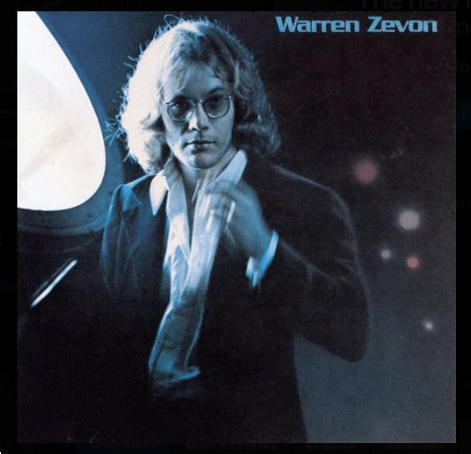
In his review of Warren Zevon (the album), Mark Deming characterizes Zevon’s music as being so “full of blood, bile, and mean-spirited irony” that even “the glossy surfaces of Jackson Browne’s production” couldn’t “disguise the bitter heart of the songs” on it. This assessment seems wrong-headed in a number of ways, particularly in its suggestion of a mis-match between Browne’s approach and Zevon’s raw material.
The fact of the matter is, as Crystal Zevon details in her biography of Warren, I’ll Sleep When I’m Dead, the album was actually a kind of family affair, with Browne eliciting contributions from his and Warren’s incredibly talented L.A. musician friends, including members of the Beach Boys and the Eagles (Don Henley and Glenn Frey) as well as Bonnie Raitt, Stevie Nicks, Lindsey Buckingham, Phil Everly (of the Everly Brothers, who Zevon had toured with), David Lindley, Rolling Stones saxophonist Bobby Keyes, and many others. As Crystal Zevon concludes, “It seemed there was no one who wasn’t flattered and delighted to take part in the recording of Warren’s debut album” (p. 107).
I think Browne & team’s treatments are spot-on in their approach, in that they highlight Zevon’s musical gifts without undermining the inimitable mix of wit, sting and sweetness of his lyrics. As Deming admits, “for all their darkness, Zevon’s songs also possessed a steely intelligence, a winning wit, and an unusually sophisticated melodic sense, and he certainly made the most of the high-priced help who backed him on the album.” What resulted from those recording sessions and players “remains a black-hearted pop delight,” he adds.
Browne & team’s approach is clearly FM radio friendly and pop-oriented; in that regard, it’s very much in the vein of other 1970s L.A. artists like Fleetwood Mac, the Eagles, Linda Ronstadt, Bonnie Raitt and Browne himself. Though Zevon’s recordings usually feature his piano, for this tune Browne opted to make the guitars and bass more prominent than the keys, though the piano fills become more noticeable during the turnarounds and especially toward the song’s end. For the most part, though, it’s Waddy Wachtel’s (or Ned Doheny’s? Lindsey Buckingham’s? Browne’s? — the credits aren’t clear) delicate triad-based electric guitar fills that take center stage. Marty Davis adds some nifty slides and grace notes on bass as well.
Most interestingly, Browne inserts saxophones (courtesy of Bobby Keys) and soulful female vocals by Rosemary Butler beginning with the first chorus. The sax parts lend the song a slightly dark, “late night” vibe a la Steely Dan (think “Deacon Blues” or “Black Cow” from Aja). The saxes and backing vocals continue to the song’s big finish, which features a tag of the song’s title phrase over a slow retard. Overall, the production is quite tasteful and mainstream — it’s not at all experimental or boundary-crossing. Browne clearly didn’t want to distract from the song’s lovely melody and subtle lyrics.
Here’s my version of this incredible tune.
My recording sticks to the same basic framework as Browne’s, though it’s much less polished and professional (I don’t have the chops of his session players, obviously, and I recorded it in my basement rather than a high-end L.A. studio). I don’t play piano or saxophone, but I did my best to emulate the delicate guitar fills, and I added some rudimentary slide touches on my lap steel (interestingly, David Lindley doesn’t appear on Zevon’s recording, though he was there for the sessions).
My daughter Eleanor provides the lovely backing vocals from the third chorus on; I especially love the vocal echoes she provides for the phrases “up all night” and “just be right” in the last verse, so I doubled those, panning them to both sides. The kid’s got some serious talent, no? She puts my wavering vocals to shame.
First off, I learned how hard it is to even approximate Zevon’s cool, cynical delivery. See for example, his phrasing on the word “Alas” versus Linda Rondstadt’s version and mine on the same. It’s inimitable, and absolutely crucial to how his songs come across.
Zevon’s recording includes some subtlely tricky percussive treatments and rhythmic changes on the bridge, to emphasize key phrases in the lyrics. I found it hard to emulate those, so I wound up just going heavy on my crash cymbals instead. I’m not sure that works though; this is a ballad, not a rocker, obviously.
I also simplified the tune’s intro riff, smoothing out Zevon’s quick da-da-DAH! rhythm. Mine is more like a “da, da…dah,” with equal emphasis and rhythmic spacing between all three notes, versus Zevon’s quick, shortened “da‘s” followed by an emphatic “DAH.” My approach just felt like a quieter, less fanfare-ish way to enter the song, and it also worked well for the repetition on the turnaround after the second chorus.
Though my mix of the song is super rudimentary and the overall production pretty rough and homemade sounding, I hope it manages to capture something of the spirit of this great, unique tune. After spending three weeks recording it, I’m more convinced than ever that its potent blend of desperation, angry resignation, and flickering hope provides the perfect accompaniment to our current national situation.
“Brutal Irony” is my response to the current world situation, with the planet being locked down due to the coronavirus (COVID-19). Even though it’s just a demo, I’m particularly proud of this recording because I not only sang and played all the instruments on it, but also recorded it and mixed it myself.
When I shared it with some friends, one said it has “a real Tom Petty vibe to it,” while another noted that the doubled vocal parts have a Donald Fagen (of Steely Dan) quality to them. A third said it reminded him of Neil Young — but he always says that about my tunes!
I’m curious: What influences (songs or artists) do YOU hear in it? Thanks for listening!
The title song from my upcoming EP, “Bullet With Your Name on It,” is now available on several digital platforms as well as on my Bandcamp page.

 Mack's Musings