Bonesaw (For Jamal Khashoggi) now available on multiple digital platforms

See this Distrokid landing page for links to “Bonesaw” on iTunes, Spotify, Apple Music and several other digital platforms. More background on this song, as well as an analysis of seven different types of political songs by Philly-based songwriters, can be found on my recent blog post “The Political Song: Seven Approaches.”

The Political Song: Seven Approaches

It’s a crazy time in ol’ the U.S. of A. right now, what with the contentious Democratic primaries competing against the ongoing incompetence and venality of King Trumpf’s administration for our dwindling attention spans. But if you’re a songwriter who cares about politics it’s hard to resist the urge to engage with that topic, in order to try to clarify, persuade, inspire, and/or deepen your audience’s engagement with the issues you care most about.

But how to go about it? The old model of the folky protest song is still available of course, but that approach long ago started feeling shrill and predictable. Since the 1960s the repertoire of politically-minded song forms has widened greatly, with all sorts of new approaches being tested out, from the grim first-person lament of Springsteen’s “Born in the U.S.A.,” to Public Enemy’s blistering “Fight the Power,” to Patti Smith’s anthemic “People Have the Power” — to name three of the many hundreds of songs that have charted new approaches to political expression since the sixties.

Here in the City of Brotherly Love, several of my favorite songwriters (a few of which I am blessed to call mentors and/or friends) have tackled the challenge in their own unique ways, while speaking out on a variety of political issues. As I struggled to find an original and impactful way to address the recent rise of authoritarian-style leaders — an effort that resulted in my song “Bonesaw (For Jamal Khashoggi),” which was released today — I was lucky to have their songs to ponder and consider as possible models of politically-inspired songwriting.

What follows is a brief analysis of seven very different songs by these writers, with an eye toward better appreciating the ingenious ways they tackled the challenge of getting us to think about, and potentially act on, the political issues they wanted to address. Even if you’re not interested in my takes on these songs from a craftsman’s perspective, I hope you’ll at least give them a listen, either via the individual title links below or this Spotify playlist I created.

Cliff Hillis’ “Love Not War”

If you’re a friend of Cliff’s (and who isn’t? – as David Uosikkonen once noted on introducing him as a band member, Cliff is widely regarded as “the nicest guy on the planet”) or if you follow him on social media, you’re no doubt well aware that he’s a passionate man when it comes to politics. He’s been battling it out on the front lines against our Trumpster fire of a president, though in as sensible, mild and amiable way as you could possibly imagine. He’s clearly as frustrated and enraged as the rest of us, yet somehow he finds a way to bring an open heart to every dialogue and to show genuine empathy toward others, even if he vehemently disagrees with them.

What I love about this song is how simply and succinctly it embodies that approach to today’s adversarial political climate. Though it begins with a jangly, light-hearted melody, the first verse goes right to the heart of the issue:

Although we are enemies
We make a perfect pair
You with your suit of armor
And me with my fist in the air

Gathering up our armies
Making our battle plans
Waiting for that signal
Two if by sea, and one if by land

But then comes the abrupt turn of the pre-chorus:

But ho-old on, let's put up our flags of truce
Because we both know that it's no use
When you've forgotten what you're fighting for
It's time to make love, not war

Boom! Within the first 1:09, Hillis sets the scene, lays out the conflict, and reaches out for resolution — both lyrically and musically. The second verse elaborates by tracing the (pre-)origins of the crisis at hand, putting it into a longer, more humane perspective:

Once we walked hand in hand
The years pulled us apart
We drew a line into the sand
And tightened up our hearts

You know as well as I do
That's just no way to live
So can we put our weapons down
Everything that you get is the same that you give

The tune is so lilting and sweet, and the lyrics so simple and direct, that you hardly even notice the masterful economy behind it. Like its title, the song’s melody is as catchy, direct and memorable as the pithiest bumper sticker. It’s the perfect, enlightened antidote to our seemingly incessant fighting in the online political trenches.

Pete Donnelly’s “American Town”

The title cut from his 2014 album of that name, “American Town” takes the sense of sadness and gloom we all felt after the senseless murders of Trayvon Martin and several other African-American youths and compresses it into a painful cri du coeur. It starts off with some loud, thrashing, industrial-sounding guitar shrieks, but quickly settles into a mid-tempo, classic Tom Petty-style chord sequence (E – A – E, C#m – B – A – E) embellished by some nifty vibrato flourishes. Or so you think — until Donnelly’s anguished tenor kicks in on the pleading first verse:

What's your country done for you now?
Is it making you feel that you just don't count?
Even if you know your way around
You'd better watch out when the sun goes down

Ouch! The lyrics put us on notice immediately, then pan back calmly to reveal the bigger picture:

Your bankers, lawyers, collecting their fares
While the sick and diseased are left to despair
Each of us knows what another can't bear
Being cheated and lied to, treated unfair

The chilling cry of the chorus kicks in with an angry scrape of the low E string, as Donnelly’s voice rises demandingly:

Sometimes I wonder if everyone sang
As loud as they could at the top of their range
All of the glass would come shattering down
To litter the streets of this American town 

Without pointing any fingers — note how he deftly employs the generalizing “some folks” — Donnelly takes on the victim’s view in the second stanza:

What's it take for some folks to see
What it's like to have never been free?
Watching you waiting for one little slip
Do you know what it's like to be treated like this?

As the second chorus kicks in with a roar, it’s almost like Donnelly is channeling the fear and rage that built up to the Ferguson riots of 2014. After a searing guitar solo followed by some bass rumblings intercut with spiky electric piano and guitar riffs, the rage softens into despair with the final, imploring verse:

Rivers of blood have begun to flow
Each of us caught in the undertow
The hardest rain has yet to fall
'Cause high on the hill there's a clarion call

“Clarion call” indeed. This is a call-to-political-arms of the highest and yet most elemental order. But it’s universal in approach rather than partisan: If we truly love our country, Donnelly seems to be saying, we absolutely have to address our racial and economic inequities. As he put it in an interview:

“It’s a critical song but it’s not an anti-American song. To be critical of your country is to be caring of it. For me, the song is a reflection of what I’m seeing. It seems like there’s so little protest music right now, and there’s so much to criticize. People have to make their voices heard.”

The first time I heard him perform this song I couldn’t hold back the tears. Kudos to Donnelly for making his voice heard in such a passionate yet stirringly artful way.

Almshouse’s “Gaslight”

This more recent tune, by Irene Lambrou and Troy Schoenmeier of the band Almshouse, caught my eye when it showed up in one of my automated “…you’ll also like” Spotify playlists a few weeks ago. From the title there’s no mistaking what — or more importantly, WHOSE — phenomenon Lambrou is tackling lyrically here. What’s surprising is that she manages to grapple with it without getting overly shrill, strident or obvious. In fact, it took me a few listens to hone in on the lyrics’ edginess.

It begins hauntingly against a backdrop of layered, reverb-y electric guitar arpeggios, as Lambrou slowly intones:

Open wide, eat the lies
Real men don't apologize
Shut your mind, my darling, shut your mind
Close your eyes, my darling

Then the rhythm section kicks in, though still somewhat restrained, for the second verse:

When you see the water rise
Just pretend we'll be alright
Shut your mind, my darling, shut your mind
Close your eyes, my darling
Close your eyes

With that second iteration of the word “eyes” the tune opens up and ascends to a darkly lifting half-chorus, now sung from the gaslighting victim’s disoriented point of view:

I am in another world 
Upside down and I'm a lost girl 

The second verse has a nursery rhyme-like, or William Blake-ish, ring to it, as it admonishes the listener to:

See the cities burning bright
Lock the doors, hold on tight
Shut your mind, my darling
Close your eyes my darling
Close your eyes

A full chorus follows:

I am in another world
Upside down and I'm a lost girl
Stumble through the strange, strange night
I lost my way in all the gaslight

The music suddenly stops, and a doubled guitar solo erupts out of the silence, only to sweep back into the chorus one more time. By this point the full orchestration has kicked in, to solemn and haunting effect. It’s almost as though some kind of religious or mystical event has occurred.

But no: it’s just that the lulling voice of the gaslighter-in-chief has finally worked its spell — which is what makes this song’s approach so ingenious. Like a good fiction writer, Lambrou doesn’t just describe a scene, she makes it come alive by putting you in it. As the final hushed note fades, you realize that you now know what it feels like to be gaslighted. The musical synesthesia, so to speak, is mesmerizing.

John Faye’s “Miss America”

I’ve secretly taken to calling John Faye, the multi-talented songwriter and singer extraordinaire behind the bands The Caulfields, IKE, The John Faye Power Trip, John & Brittany, and Those Meddling Kids, “EFFing John Faye,” at least in my mind. It’s not (just) because I’m jealous of his f-ing incredible talent, but because he’s Everybody’s Favorite Frontman. (Get it? “Now introducing, EFF… John Faye!!”)

Seriously, everybody I know loves John and admires his uber-potent songwriting. He’s been a fixture of the Philly music scene (like a few other folks on this list) for several decades now, and he’s still cranking out the hits. But not just any hits: John only knows how to craft smart, edgy, impactful and memorable ones, it seems.

“Miss America” came out a couple of years ago, just as the Trumpf (Mal-) administration was starting its endless war on immigrants (especially those with a skin color different from Herr Orangeface’s). The song is a bit of departure for Faye in that it instead of embedding sporadic Molotov cocktails into his lyrics via ironic potshots and wicked smaht turns-of-phrase (see, for example, his tune “Where Are They Now”), “Miss America” aims for a direct-hit political statement right from the get-go.

Not that it doesn’t include some of Faye’s signature ironic lyrical flourishes. Behold the master at work:

I miss America
But I don't get the feeling
That she's missing me back

I miss America
But she don't wanna see
That I've been under attack

They say you never know how lucky you are
You got a half a tank of gas in your car
Hit the pedal and go
Hit the pedal and go... I miss America

Naturally, that chorus hook (“I miss America”) is about as catchy as anything this side of the Coronavirus. I love how Faye immediately goes for the jugular in the second verse though.

I've been here for her
So why she want to leave me
When she needs me the most

This is America
But she just wants her
Very own reality show

It's getting hard to get my heart to pretend
Thought she would never but she fooled me again
Honey, where do we go?... 
HOW THE HELL SHOULD I KNOW?

Like the Almshouse song discussed above, Faye ironically invokes the false placations of a nursery rhyme / lullaby in the bridge:

Hush little baby, don't you cry
Mama's gonna sing you a lie, lie, lie...
Hush little baby, don't you cry-eye-eye

(Interesting how feelings of infantilization seem to accompany the Trumpf admin’s actions, no?) And then comes the coup de grace, with the final pre-chorus:

But what's a lover, not a fighter to do?
I'm gonna tie a yellow ribbon to you
So you know that I know
And I know that you know... I miss America

I love the pure snark behind “I’m gonna tie a yellow ribbon to you.” What schmaltzier image (and song) could Faye possibly invoke to make such a simple point: America, you’re lost. It’s time for you to come back. We’ll embrace you with a hero’s welcome when you do. But first, you have to remember who you are.

There’s a world of hurt and frustration and despair wrapped up in the hyper self-referential ironies of those final lines (“So you know that I know / And I know that you know.”) You can’t put it past us this time, Faye is implying. Although, perhaps she just did? (Wink, wink.)

Ben Arnold’s “Detroit People”

This tune off Ben Arnold’s fine 2016 album Lost Keys responds directly to both the broader economic collapse of the title city as well as the Flint, Michigan water crisis that started in 2015 and still (unbelievably) continues to this day, since the city won’t finish replacing all of the lead-contaminated water lines until June of this year. As I watched the latter crisis unfold, with its ongoing revelations of underlying corruption, mismanagement, and racism by the Republican Governor of Michigan and his cronies, I could really only muster one response: outrage. Any song I’d have tried to write about it would have fumed with pure anger and hate.

Luckily, Ben Arnold is a WAY better songwriter than I am. His response was to express solidarity with, admiration of, and compassion for the people of Detroit and Flint. A bluesy intro to this tune gives way to a more upbeat, R & B favored, horn-backed sound as Arnold invokes the workingman / woman’s life over his surging piano:

Whole lot of muscle, black grease on their hands
A constant struggle to make it in this land
Things got real ugly when some folks took a stand
Sure ain't much money but they do the best they can

The chorus makes it crystal clear whose hurtin’ (to use a favorite word of his) Arnold is singing about:

Detroit people, take it on the chin
Detroit people, gonna come around again
Detroit people, in the heart of Michigan

The intro’s blues riff intervenes briefly with a half-time feel before the second verse goes on to describe the city’s proud history prior to the recent crises:

Live in a city, left out in the cold
Their life is gritty, but it got us down the road
That bumper's spit-shined, don't matter if it snowed
She sure looks pretty, and she got a lotta soul 

After the second chorus and another repetition of that slowed-down blues lick, Arnold lays down an absolutely gorgeous half-time bridge, buoyed by lovely Motown-style horns:

Hanging by a thread, it's tough down in the rubble
Just can't get ahead, God, these times are troubled
Seems like there's nothing left but pieces of the bubble
This city is depressed but the people rise above it

The melody rises with those last three words, and we’re back to the chorus chords, with Arnold and a group of backing singers wailing “Na na, na na na / Na na na, na na na / Na na, na na na / Na na na, na na na.” After another reprise of the blues lick, Arnold continues expressing his admiration for the people of Detroit, this time emphasizing their monumental musical heritage:

Them records spinnin', 45's go round and round
They built a solid groove, knew how to lay it down
They taught us how to move, and we still love that sound
Brothers and sisters makin' hits in Motor Town

It’s a pretty straightforward tune, all in all, but Arnold puts all the pieces in just the right places: the blues licks, the horns, the tasty rhythm section, the stirring vocals — and above all, the heart.

Marion Halliday’s “We Are the Change”

I wrote in the introduction to this post that the sixties-era protest song “long ago started to feel a bit shrill and predictable.” After hearing Marion Halliday’s stirring live recording of “We Are the Change,” from her recent album Rings Around Saturn, I have to admit I was wrong about that. This rousing protest song is a call to rise up in the tradition of the very best sixties political songs, and it works perfectly for our troubled times too.

It begins with a spoken intro by Halliday, interspersed with some grumbling and “Yeah’s” from her bandmates:

I've got some questions, have you guys had some questions too? (Yes.) I think I need some answers (yeah!).

And boy, is her first question a doozy!

What harm can one man do?

She repeats the question three times with rising urgency, breaking it down along the way into the repeated phrase “What harm? What harm? What harm?” Her answers are as blunt and direct as the question is:

Go ask the Cambodians
Or the Polish Jews
What harm a man can do

In case there was any doubt, Halliday — who bills herself as a “Proud Purveyor of Bluegrass and Bourbon Infused Original Women Powered Americana” — is a pretty ballsy woman. The ensuing verses don’t back down any, either. The second verse consists of the repeated phrase “When lies become the truth,” which gets whittled down to “When lies, when lies, when lies!”

This is followed by the plangent:

How long till we raise our voice?
Till they come for our brothers?
Our sisters too?
And maybe me and you?

The bridge unabashedly announces its faith in the power of righteous resistance in the face of hatred and evil:

Enough shouts and hate
We must listen with our hearts
If we do we might find
Truth beyond the noise
And a place to make a start

In a classic sixties-style move, the song then turns to stress how we each need to take personal responsibility if we hope to collectively initiate broad social changes. The repeated refrain here is “What good can we each do?” (three times) followed by “What good, what good, what good?” Halliday responds pointedly: “Go ask Nelson Mandela / Or maybe Rosa too / What good we each can do.”

The final verse’s repeated phrase, echoed by a choir of women’s voices, is “What change can we create?” “Doesn’t matter, big or small,” Halliday answers, “just start it now it right now – the change we will create.” This is followed immediately by the title phrase “We are the change, We are the change,” which Halliday emphatically repeats against the choir’s swelling “Ooh, ooh-ooh’s.”

In lesser hands, this simple call-and-response structure could easily slide into cloying cliche, but thanks to Halliday and her bandmates’ powerful, bell-like voices the song strikes just the right conscience-stirring note. Audiences lucky enough to hear it performed live, I’m guessing, will feel pretty darn primed to march into a brave new future by song’s end.

Mack Hooligan’s “Bonesaw (For Jamal Khashoggi)”

Finally, if you would be so kind as to indulge me, I’d like to add a few words about my new song “Bonesaw.” In case you are not familiar with Jamal Khashoggi’s story: he was a Saudi Arabia-born U.S. citizen and Washington Post journalist who was lured into the Saudi Arabian embassy in Turkey and brutally tortured and killed because he had published some stories that were critical of the reigning Saudi Crown Prince, Mohammad bin Salman.

Though bin Salman later shifted the blame and publicly hanged several people after a closed court supposedly found them guilty of the crime, the true story (based on collaborated reporting) is that the Prince had his henchmen lure Khashoggi to the embassy by promising to supply some paperwork Khashoggi needed to facilitate his upcoming marriage to his fiancé, who was waiting outside the embassy while Khashoggi went inside. Once he was inside they brutally tortured, murdered and dismembered him.

The Saudis had thought ahead, though. Not only did they hire a body double to leave the embassy a while later (like Khashoggi’s fiancé wouldn’t notice the difference?!), but they asked a doctor to bring in a bonesaw, to help facilitate the dismembering and disposal of the body.

So that’s the origin of the song’s title, and the impetus behind my writing it.

But how to write about such a gruesome, almost unimaginable event? Did I want to focus solely on Khashoggi and the grisly details of his assassination, or broaden the focus to make a more general, U.S.-relevant political statement, given our current president’s expressed admiration for and chummyness with not only bin Salman, but other strongman/authoritarian types like Putin, Erdogan (Turkey’s dictator), and Kim Jong-un?

I chose the latter. My next question/challenge was: whose perspective should I present the song from? Khashoggi’s? His fiancé’s? The Saudi henchmen’s?

I decided to stretch myself by trying to inhabit the mentality of the central force(s) behind the suppression of dissidents like Khashoggi: the authoritarian leaders themselves. Though this seemed like a pretty dicey approach, I decided to give it a try.

The first verse is told from the point of view of bin Salman:

You see that man? 
He's got opinions
You see that man? 
He's not on our side

He's asking questions 
On television
Just might uncover
All those things we wanna hide

Perhaps this says something bad about me (hehe), but I kinda dug the idea of writing from the evil villain’s perspective. So I continued in that mode. What kind of awful statement(s) about dissidents like Khashoggi might an egomaniacal, paranoid authoritarian like bin Salman make to his lackeys? Given the Saudi obsession with swords and the scheme he eventually cooked up, possibly something like:

We've got to cut him down
We've got to cut him down... right now

When I found some appropriately sinister chord changes and a melody to accompany this refrain, I knew I was on the right track. But I didn’t want to get stuck on Khashoggi’s story. Were there other journalists, maybe closer to home, who’d experienced such threats and violence? Who had our own benighted, wannabe authoritarian president been trying to suppress recently?

I knew the answer immediately (this was not too long after the Women’s March). Hence for the next verse I imagined President Duncecap peering angrily from behind the curtains of the White House at a group of women protestors, and then glaring angrily at a TV set displaying a congressional hearing during which a woman was testifying against His Trumpyness.

You see those girls? 
They don't respect us
You hear those women? 
They keep knocking at our door

They're asking questions, 
They won't protect us
Don't even answer
They'll just want more and more

And then of course — BOOM! — off with their heads too (meaning, same chorus refrain but with “him” replaced by “them”).

I struggled the most with the bridge. I knew where I wanted to go with the final verse — I wanted to invoke crowds charging the evil villain’s fortress while he shouted at his underlings to “cut them all down!”, essentially — but I felt like I first had to indicate somehow that although the foreign and domestic authoritarians’ cultures might differ, their essential motivations and depraved conceptions of everything being about Us versus Them were identical.

My first draft of the bridge didn’t quite do that. Luckily, on hearing it my friend Mr. Faye (see above) gave me a nudge in the right direction. “What do those guys do to the dissidents, to put their backs up against the wall, so to speak?” he asked. The answer:

We've got to put the fear of God in their hearts
Put out the fire in the eyes
We've got to take their will and break it apart
We've got to --

“We’ve got to do WHAT?,” John and I asked ourselves out loud. Order supplies? Cover them with… chocolate and flies? (Further hilarity ensued along these lines, as often happens during our writing sessions.) Eventually I stumbled on the rhyming word we were looking for:

We've got to make them COMPLY

Because, hey, what do all authoritarians demand above all? Two things: absolute loyalty and compliance.

The final verse pretty much wrote itself, since I already had a mental blueprint for it, as mentioned above. (The awesome idea of inserting an exotic-sounding percussive interlude to lead into it came straight from the fertile brains of co-producers John Faye and Ron Disilvestro, however.) Here’s that last verse:

You see those crowds?
They keep getting larger
You see those people?
They're not gonna turn away

It's getting louder
Supersonic whisper
Those angry people
Gonna make them rue the day

Full credit for the amazing phrase “supersonic whisper” goes to Mr. Faye, who insisted on it despite my initial hesitations (yup, he was right, as usual). And Ron gets all the credit for the drums and other percussion touches, as well as for his superlative recording, mixing and engineering skills.

As for the inspiration behind my initial songwriting efforts? Just scan the list of talented Philly songwriters above, and you’ll know exactly where that came from.

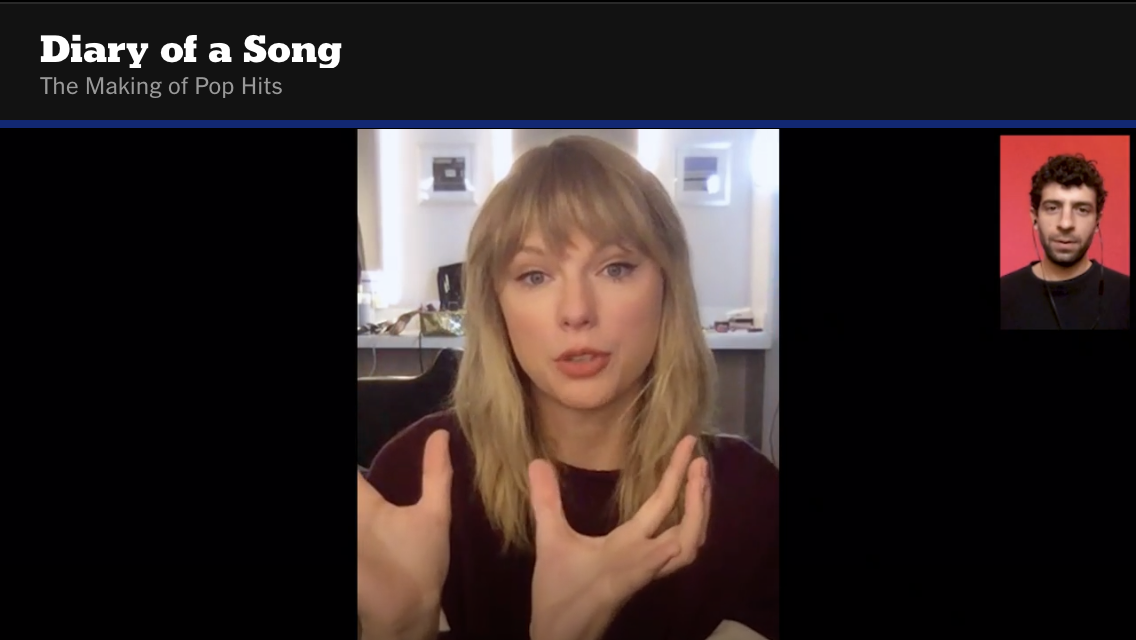
Diary of a Song: Taylor Swift’s “Lover”

I’m not exactly a huge Taylor Swift fan but this is pretty cool. Her producer’s explanation of how a bridge works in a song is simple but effective. I like how she goes from inarticulate and somewhat blasé in talking about the song to very specific and excited — it kind of mirrors the creative process itself.

How Taylor Swift Writes a Love Song

REVIEW: Shinyribs’ “Fog & Bling” Is Infectiously Funky Fun

As published in Americana Highways on July 28, 2019 

If laughter is the best medicine and music soothes the soul while taming the savage beast, we could use more Shinyribs in our lives right now.

Luckily, that joyful, Austin-based “psycho-active gulf coast funk ʼn soul” outfit (to quote their motto from an old t-shirt design) has got that medicine and brings it once again on the delightfully upbeat and at times downright silly Fog & Bling, their latest release (June 14th) from Mustard Lid Records.

The goofy, infectious fun begins right from the start with the R & B tune “Sing It Right,” wherein Mr. Shinyribs himself (Kevin “Kev” Russell, aka, the former frontman for The Gourds) intones the songʼs preamble in a nasally, muted police dispatcher voice: “Breaker 1-9… we got a big ʼol country boy down on I-10 East… Says heʼs a singer for a band… called Shinyribs!”

As the band cranks up the beat, Russell proceeds to lay down the rules for doing what the songʼs title says:

Sing it right, try to keep it in time
Oh, sing it right, do not walk on my rhyme
Know all the words and the way that they feel
Oh, sing it right, make it roll, make it real

Buoyed by longtime drummer Keith Langfordʼs solid timekeeping and Jeff Brownʼs funky basslines, and aided & abetted by Winfield Cheekʼs keyboards along with the tasty riffs of the Tijuana Trainwreck Horns (Tiger Anaya and Mark Wilson) and the sassily soulful backing vocals of Kelley Mickwee and Alice Spencer (aka, The Shiny Soul Sisters), Russell exhorts the would-be singer to

Try to transcend the song, but keep the beat where it belongs
It donʼt last long, so
Sing it right in the night, when the lights are all down
Sing it right, keep it tight, like a kite come unwound

That last line aptly captures the slightly unmoored, free-spirited precision of the album as a whole. In contrast to 2017ʼs solid I Got Your Medicine, which features some stellar songwriting but seems slightly subdued at times (at least in contrast to the bandʼs hyper-lively onstage presence), Fog & Bling comes across like a hopped-up, horn-tooting dance party teetering on the edge of all-out delirium. In that respect it nicely captures the kinetic energy of the bandʼs live shows, complete with Russellʼs arsenal of goofball moans, groans, a-haʼs, oh-noʼs, gurgling yawps and other forms of rhythmic breath-gymnastics. (If only it could capture his nimble dance moves!) Itʼs those interjections, along with the quick song transitions and spontaneous sounding vocal takes that kick Fog & Bling up a notch from its solid predecessor.

Among Fog & Blingʼs highlights are the jaunty “Iʼm Clean,” with its knowingly ludicrous similes (“Clean as a preacherʼs socks / Clean as the keys to the prisonʼs locks / Clean as a gin drink on the rocks”); the ultra-catchy “Hoods of Cars,” which celebrates the lazy times “we let slip slowly away / Following jewels in the tar, layinʼ on the hoods of cars,” noting how “It ainʼt ever in the movies, more taboo than boobies / Baby thatʼs how it feels”; and the rocking paean to friendships cemented via the crazy hardships shared by touring bands, “The Good Times and the Bad.” The surreal ups and downs of life on the road are perfectly captured by that songʼs final verses:

Stayed home in droves for a must-see band
Spent the night in a taco stand
At least it was warm
I could stretch my legs
Woke up next morning smelled like eggs

Roof of the van in the starlight
Still high from the show that night
Driving home something wasnʼt right
Flat tire, no spare.

And then thereʼs the irresistable “Got Sum,” with its jokingly jealous lamentations about how:

They all got money
They all got booty
They all got all that they want

The way they flaunt it
It just haunts me
There oughta be a law

…Everybody got sum, but I ainʼt got none!

The confessional, zeitgeist-summarizing “Crazy Lonely” is another type of lament altogether, with its incisive observations on the deep loneliness that undercuts our social media obsessed age:

I feel like a failure
most of the time
So many dreams
have died on the vine

When weʼre together
we just sit there and stare
At our phones glowing
and we ainʼt even there

For my money, though, the true standouts on this album full of shiny nuggets are the radically contrasting “Highway of Diamonds” — the one slow ballad on the album — and the giddy come-on of a closer, “Doing It With You.” Along with its sweetly high-lonesome chorus, the former features such beautifully evocative lyrics as

Laughed at and left out, sold into self-doubt
Wallflowers grow wild with time
Now nights filled with jewels, city glow & vines…
Highway of diamonds, hereʼs to the shy ones
Under the stars, like rivers we run

“Doing It,” on the other hand, finds Russell bouncing between crooning suggestively to his lady love and laughing at the faux sauvity of his insinuations:

Oooh-wee baby, whereʼd you find
that sense of humor
and that filthy mind?

Now letʼs get together,
you and me
I need a date — canʼt wait
Maybe 2 or 3

The song gets sillier as it goes, culminating in howlers like “I got no scruples / You can tell Iʼm in love / Take a look at my pupils.” Itʼs impossible to resist the “Iʼm high and I canʼt lie” vibe of the tuneʼs bouncing chorus:

If you wanna party, Iʼll party with ya
Ya wanna be tardy, Iʼll be tardy too
Ya wanna get drunk
Well Iʼll get drunk with ya
Stumblinʼ in the park after dark
Well, you know what to do

The live snippet the band tucks onto the albumʼs end — which sounds like a surreptitiously recorded excerpt from a particularly high-spirited band practice — plants a lampshade-style cap on the albumʼs carefree vibe. As the band bumps and grinds away disco-style, Russell comedically improvises the lyrics. “This is called ʼLoosen Up,ʼ” he laughs:

You gotta loosen up,
Loosen up, movinʼ up,
Booze it up, loosen up… Yea-ahh!

He continues riffing on the title a la Richard Simmons exhorting an aerobics classʼs attendees to keep their cardio rates up, until the band falls back into a slow crawl and Russell ad libs, “Laser wash… laser wash, itʼs a laser wash / Put the ky-bosh on your laser wash — itʼs all closed down!” Then as the band abruptly stops, Russell delivers the coup de grace with a deadpanned, deflationary quip: “Letʼs go get some tacos.” Itʼs a comedically perfect ending to this expertly loosey-goosey, joy inducing gem of an album.

__________

Music, videos, merch and tour dates can be found at shinyribs.org .

REVIEW: The Yawpers Rock Existential Angst On “Human Question”

As published in Americana Highways on June 17, 2019

You know what’s really satisfying? When a young band that you’ve been crowing about for years hits its stride and releases an absolute masterpiece of an album — THAT’s what.

Denver’s hard-rocking roots/punk/Americana outfit The Yawpers released just such an album on April 19th, and I am SO digging it. It’s the album I was hoping they’d eventually make: one that foregrounds and consolidates all their strengths, while at the same time adding some intriguing new elements.

Human Question strikes paydirt — or perhaps rather, roots rockabilly gold — on all those fronts. It really doesn’t matter what label you throw at it,: this is just a fine, invigorating, fully satisfying album by one of the most promising bands that’s come around in a long time.

What makes Human Question so great? Though The Yawpers’ sonic approach hasn’t changed radically, they’ve added some new textures and wrinkles that deepen and fill out their sound. I’m always put in mind by The Yawpers’ tunes of the Pixies’ compositional approach — as captured in the title of their fascinating reunion tour documentary, “Loud Quiet Loud” — which was later copied by Nirvana and a whole host of indie and grunge bands. Like those earlier bands, The Yawpers are masters of the startling, let’s-turn-this- thing-on-a-dime dynamic shift. It lends their songs a dangerous, unpredictable edge that adds to the band’s thrilling intensity.

And yet: Cook doesn’t let out one of his trademark bloodcurdling screams on this album for 17:31 minutes. (Such admirable restraint!) His first, fully articulated yawp — not counting a few moans and modest hollers sprinkled into the prior songs — doesn’t arrive until 2:56 minutes into the poundingly cathartic “Earn Your Heaven” — shortly after he comedically announces, “Ladies and gentlemen, I wanna welcome to the crucifix, Mr. Harry Connick Jr.” (!!!).

Cook’s yawps seem less “barbaric” than primally purgative (think scream therapy or a painful exorcism) on Human Question, however. Or perhaps that’s what those bloodcurdling screams were always aimed it? It’s possible that Human Question’s unflinching focus on mortality and loss just highlights that intent more effectively.

Supporting the primal quality of Nate’s emotively deck-clearing vocals are guitarist Jesse Parmet’s slide and lead guitar contributions, which dance, dazzle and weave in and out of the mix in intense yet consistently tactful ways. New drummer Alex Koshak’s playing is steady and unobtrusive for the most part, though he provides some primitive tom-tom accents on “Dancing on My Knees” and absolutely explodes on the rootsy “Earn Your Heaven” and the hard-rocking “Forgiveness Through Pain.”

One sonic element introduced on this album that I hadn’t noticed before in The Yawpers’ catalogue is the layered backing vocals on “Reason to Believe.” But oh, that raw guitar solo by Parmet! We’ve certainly heard that before, but the sonic richness of Human Question makes its rawness stand out all the more.

And then there are the contributions of engineer/mixer Alex Hall, including some tasty Wurlitzer on “Earn Your Heaven,” piano on “Carry Me,” and even a bit of vibraphone on “Can’t Wait” and “Where The Winters End.” The keyboard touches add tasteful new textures and moods to the songs just where they’re needed.

This album sounds WAY bigger than Capon Crusade (The Yawpers’ debut) or American Man (their standout 2015 release), whose sound was pretty huge to begin with. Human Question takes the band’s sense of intensity and urgency to a whole other level, however — and appropriately, given the album’s big ambitions.

It also sounds refreshingly organic and immediate, unlike their previous release, the meticulously plotted concept album A Boy in A Well. According to their label, The Yawpers set out to create “a contrasting immediacy” on the new album and accordingly took a more basic, live approach to the recording process: The album was written, rehearsed and recorded over a two-month period with Reliable Recordings’ Alex Hall (Cactus Blossoms, JD McPherson) at Chicago’s renowned Electrical Audio. The band tracked live in one room, feeding off the collective energy and adding few overdubs. Through the new approach, 10 songs connect with an organically linked attitude and style.

Underpinning it all, however, is frontman/lyricist/guitarist Nate Cook’s focused and thematically cohesive songwriting. Cook’s lyrics have always been uniquely literate, fearless and impassioned, but they take a huge leap forward on this LP in terms of both their poetic suggestiveness and universality. “Child of Mercy,” for example, opens the album with a blistering, full-frontal guitar attack, but at its core is an impassioned plea for salvation from loss and brokenness:

Little child of mercy
I’m living in a quiet room
Blind to every reminder that everything goes too soon
Please wake me up when the night is over
When it’s safe to come outside

The protagonist’s despair seems raw, genuine and not at all hyperbolic, as Cook’s lyrics perfectly evoke the emptiness of abandonment:

All the shades are drawn
Wires on the walls
All the furniture’s gone
Please, give me something that I can believe in
Something that takes it away

A lesser writer would hint at or inch toward a hopeful ending, but Cook avoids that tempting deus ex machina approach, ending the tune on an even more bereft note:

Little child of mercy
I guess maybe the angels are deaf
To the wants and needs of the weary
To the chronically bereft
I’m lying down in my broken home
Like a child again

The album’s centerpiece, “Carry Me,” is a similarly mournful, loss-driven tune, though it doesn’t stop at the simple expression of despair. The song’s insistent pleading — “Please, I need my lover’s hands / To dance on my skin / To harvest my garden / Won’t you let me suffer your touch?” — grows and expands until Cook commences screeching and the dark wail of an saxophone unexpectedly breaks in. In contrast to the opening track, “Carry Me” does in fact arrive at a kind of consoling closure, though its admittedly being based on a lie undercuts that consolation:

Won’t you take me into your arms, if only for a moment
And carry me
Lie to me as a little mercy
Lie to me, it’s all I need
Tell me you love me, in this moment
And you’ll carry me through

It’s an audacious, rug-pulling ending that underscores the song’s painfully desperate yet fully self-aware expression of emotional neediness.

Both the title track and “Man as Ghost” address loss as well, taking similar though crucially different trajectories. The former projects a weighty, funereal tone in its questioning of the ultimate meaning of human existence:

Can there ever be an answer?
Such an elegant fear
Each conviction feels so fluid
Every effigy fades
No priests, no guides, no fathers
Where the body is laid
What is this human question?

The song’s restrained, melancholic feel is accentuated by Parmet’s droning slide guitar and the high-in-the-mix (and thus exotic sounding, in this context) shakers, until Hall’s piano and vibraphone suddenly break in at the 2:38 mark. The last verse ponders whether mourning rituals can ever be truly effectual, given the undeniable fact of loss’s permanence:

Traveling up the mountain
Past the Catherine Wheel
The only children see where
The body’s revealed
There is no hesitation
How do we mourn, how do we mourn?

The song’s final lines present a conundrum, rather than providing resolution or redemption:

As the silence fills our heads
There’s so much time now to forget
Sound that comforts and destroys what we needed from the noise

“Man As Ghost” provides a short but effective coda to “Human Question” (the song’s) ruminations. Again, the lyrics are at once searching and definitive in their assertion of irredeemable loss and homelessness:

I’m a ghost
This is a vicious world of poor design
I’ll build one of my own
I’ll make Jerusalem, Arcadia, or Meropis
Because I have no home

As with the prior song, the final verse further complicates the mystery of (lost) consolation, “taking ownership” of the distance the protagonist has both crossed and created.

I’ve always been a visitor but you were such a quiet place to breathe
I saw you as a vision, where the hungry go to feed
I’m a ghost, in a world of loss
In my memories you’re next to me
A limbless jury and my host
I’m finally taking ownership, I’m a better lover as a ghost

That such haunted, pensive songs as “Child of Mercy,” “Human Question,” “Man As Ghost” and “Carry On” could be interwoven with driving, intense rockers like “Dancing on My Knees,” “Earn Your Heaven” and “Forgiveness Through Pain,” with the tight weave of contrasting threads resulting in a seamless, unified tapestry, testifies both to The Yawpers’ growing virtuosity and their singularity of purpose on Human Question.

The album’s last three tunes trace a kind of arc that reflects just how far The Yawpers have come in their relatively brief career. ”Forgiveness Through Pain” is probably the most quintessentially Yawpers-ish song on the album. It has all of their hallmark stylistic elements: the pounding drums; the thrashing, dirty guitar tones; the spittle-flecked vocals and sudden, high-intensity breakdowns, all built on that grungey loud-quiet-loud template. You can almost see the veins bulging from Cook’s neck and face as sputters on in rapid-fire fashion about the Grim Reaper:

His prophecies all speak about you
From his dark bench in the yard
The leaves all fall around him, and he passes without a word

He’s a collector of all that you’ve lost
All the things you’ve left behind
All of the things that you thought that you’d see
But instead they just rendered you blind

Bring out your finest champagne
Nothing to lose or to contain
He’s not a friend, but he’s here until the end
And to teach you forgiveness through pain

“Can’t Wait,” on the other hand, is a horse of a completely different color. With its Tom Pettyish pop stylings, it’s the most radio-friendly song on the album as well its most hopeful-sounding — though (again) the lyrics belie that impression:

I’ve been looking for some comfort in this world that’s escaping me
I’ve been riding these bannisters for weeks
I’ve been chasing you through the dirty sheets
I’ve been waiting for the lights to go out on me

Though its title and sunny, chimey guitars bear a family resemblance to The Replacements’ “Can’t Hardly Wait,” The Yawpers’ tune takes the title’s professed eagerness in a very different, quite possibly morbid direction at the end: “I’ve been waiting for the lights to go out on me… I can’t wait!”

At the resting point of this musical arc is “Where the Winters End,” a mellow song of exhortation a la Dylan’s “Forever Young” or Bob Marley’s “Redemption Song”; taken with “Child of Mercy,” it effectively bookends the album with two tunes marked by prayerful supplication. The repeated incantation “May you… [fill in the blank]” functions at first exactly as it does on the Dylan tune:

May your seasons find their end
May your crowns change on your head
May you learn to walk with the dead,
And feel the living hand in kind
May your mouth find every word
May your ecstasies be heard
May you always continue to burn,
And to warm the ones you need

Naturally we’re guessing the song will continue this invocation of blessings, and for a while it caters to that expectation:

May my voice continue to rise
May my arrow find ever lie
May I never avert my eyes
And find comfort in the dark

Cook has no interest in following the formula by resolving things along pleasantly uplifting lines, however. Instead, he introduces a note of wariness that casts a shadow of doubt on the sincerity of the prior verses’ invocations:

Take me to the place where the winters stop Where I held your hand, and locked away love It’s wet and warm and hidden in the leaves

I know you wouldn’t want it left beneath
When we were young, it sheltered my belief
I know we only left it there for us
But we’re getting older… we’re getting older now

“But we’re getting older,” indeed. And perhaps stronger, and maybe even wiser, the ending — coupled with the bouncey melody and breezy arrangement — implies. But then again, perhaps not. It’s a brilliant, powerful closing to the album that resists buying into false promises of closure and consolation, while acknowledging nevertheless the all-too-human necessity of mourning one’s losses.

It’s also, and above all, clear confirmation that Nate Cook and company have come fully and decisively into their own.

__________

Human Question is available on CD and vinyl from Bloodshot Records here: https://www.bloodshotrecords.com/album/human-question

Download links as well as tour dates and biographical info can be found at: http://www.theyawpers.com

___________________________

1 Their label, Bloodshot Records, describes their sound as “a front-heavy, groovy, fire & brimstone punk-blues overlying a dynamic and metaphysical roots rock.” Uh-huh.

REVIEW: The Revivified Squirrel Nut Zippers Deliver One for the Ages at the Ardmore Music Hall

Photos by Jimmy Faber Photography

As published in Americana Highways on May 9, 2019 

One of the downsides of being a music reviewer is that after attending two or three concerts a week for months on end, you can get a bit jaded about each new show. It’s not that the performances become less enjoyable, it’s just that after seeing so many shows — almost all of them with the same classic, static format of the performers standing on stage while the audience sits and applauds politely at a distance — you lose the ability to recall the raw excitement of your first concert, when it was all so new, transcendent and mind-blowing.

I attended my first concert with my family as a 12-year-old, at the Arizona State Fair in the early 1970s. I saw José Feliciano play “Come On Baby Light My Fire” and a bunch of other covers at the cavernous, acoustically dreadful Phoenix Memorial Coliseum. Though it wasn’t a particularly groundbreaking show (to say the least), it opened up a whole new world for me — live music! — that I’ve continued to relish to this day.

But like I said, it’s rare these days that a show engenders the sheer excitement and “wow” factor of that initial encounter with the concert world so long ago.

I didn’t go into the Squirrel Nut Zippers’ show at the Ardmore Music Hall on Thursday, April 25, expecting a transformative experience — much less anything even close to that first dazzling taste of live music. If anything, I expected the Zippers to provide a mildly enjoyable evening of retro, swinging, New Orleans- inflected dance music along the lines of what I’d experienced (and loved) when I first heard their albums Hot and Perennial Favorites in the late ‘90s.

Suffice to say, Jimbo Mathis and company quickly and completely restored that early thrill of hearing live music played by virtuoso musicians. Even better: they tore down that invisible wall between the musicians and audience that is such a staple of the old, static concert set-up, literally getting everyone involved in the performance. (Translation: No wallflowers allowed!)

What made this show so vivid and delightful? One thing that jumped out to everyone I spoke with after the show — professional musicians and casual fans alike — was the incredible level of showmanship Mathus and company provided. From the moment their N’awlins style drum line snaked its way on stage, with Jimbo shouting out the spoken lyrics to “Conglomeration of Curios” via a megaphone like a giddy carnival barker / snakeoil salesman, to their equally energetic exit 18 songs and one hotter-than-hell encore later, the Zippers thrilled the packed Ardmore Music Hall with a nonstop series of costume changes, Mardi Gras-inspired stage props, bad jokes, and impossibly demanding dance moves. The latter included (incredibly) Tamara Nicolai’s swinging her upright bass above her head in time to the beat and “Dr. Sick” doing some acrobatic high-stepping while coaxing boiling-hot jazz riffs from his fiddle.

It was also impossible not to by awed by the virtuosic level of playing and singing the Zippers delivered. Whether it was vocalist Cella Blue extending her expressive, at times Bettie Boop-like swoops and hollers to their near-breaking points, or Jimbo Mathus laying down nimble ragtime jazz-meets-Delta-blues banjo and guitar solos, the uber-talented horn section of Dave Boswell (trumpet), Steve Suter (trombone) and Henry Westmoreland (sax) topping and re-topping themselves with their endlessly creative horn solos, or the tight rhythm section of Nicolai on bass and Neilson Bernard III effortlessly switching between Big Band, New Orleans jazz, and Latin/Carribean rhythms — or, to top it all off, Dr. Sick launching his fiddle and saw (!!!) solos toward the stratosphere — the extravagantly bravura playing was constant and breathtaking.

My favorite moments (and there were many) included:

• Mathus in his sparkling red suit coat, purplish pants and U.S. flag-embossed socks laying down some swinging banjo chords during “Got My Own Thing Now”;

• Leslie Martin’s fabulous piano solo, followed by Boswell’s equally amazing trumpet solo, during “Evening at Lafitte’s”;

• Dr. Sick’s crazy song introductions — “And now I will give you AUDIO PINK EYE!” — and bad doctor jokes, interspersed with his mind-bending fiddle solos;

• Saxophonist Henry Westmoreland’s polished vocal contributions on several numbers;

• Mathus’ comedic schtick, in the midst of “Suits Are Picking Up the Bill,” during which he laid down on the floor with his head against a monitor, only to suddenly leap up — as though shocked back to life by an electric current — and hop onto the side of Nicolai’s bopping bass, riding it in standing side- saddle style;

• Cella Blue’s roof-raising vocals during “Use What Mama Gave You,” as well as her beautifully melancholic performance during “Fade,” alternated with lovely trumpet and trombone solos by Suter and Boswell;

• The outrageous costumes and props, including Mathus’ twisted voodoo cane and outsized papier maché skull head, and Ms. Blue’s multiple garment changes, including (during the lead-in to “Hell”) her transformation from a southern belle into a punk-goth farm girl, complete with large black commando boots and a colorful, flower-printed summer dress;

• and finally, the unexpected visual delight provided by the black and white, Betty Boop-style animated cartoon projected above the stage during the band’s big finale performance of “Ghost of Stephen Foster.”

Of course the audience ate up the Zippers’ renditions of their early big hits, which included the five tunes referenced above, along with “Put A Lid On It” and “Bad Businessman” from Hot. But to my taste, the newer songs held a special intrigue and, being delivered with such gusto, provided double the pleasure via their seemingly endless layers of surprise.

The changes in the Zippers’ overall sound are subtle, but to my ears the new album, Beasts of Burgundy (with the stress falling on the second syllable of that last word, a la the locals’ pronuciation of the street name in New Orleans) embraces a darker, Dr. John-informed, gris-gri meets voodoo vibe. Which is not to say the songs are any less fun, just that Mathus and Co.’s lyrical concerns have gotten richer, deeper and (in a way) more universal by steeping themselves even further in the New Orleans gumbo.

To provide a visual metaphor: the new stuff feels more like an intimate street- carnival on a poorly lit and slightly ominous backstreet, and less like a well- mannered (though high-spirited), big band dancehall performance. While the new tunes are for the most part just as lively and danceable as the older ones, they have a creepier edge to them along with a correspondingly deeper resonance, I find.

Good examples of this new flavoring can be found in such tunes as “Karnival Joe (From Kokomo)” — which the Zippers opened the show with — the saucy “Rusty Trombone,” the suitably exotic “West of Zanzibar,” the title track, and their closing drumline exit tune “Hey Shango.”

I also enjoyed Jimbo’s performance of “You Are Like A Song” from his recent solo album Incinerator, which added a bit of a mournful country twang to the already tasty musical stew.

Ultimately, it didn’t matter whether your entry point was the “old,” classic Zippers tunes or the newer stuff. It’s all part of the big, delicious, delightful, and dramatically-presented smorgasbord that is the SNZs. Thank the gods for the new/continuing life this twice-reassembled ensemble is currently enjoying: I for one can’t wait to hear how they further develop their tasty musical melange.

The local opening band, Mighty Joe Castro and the Gravamen, was good fun too, though theirs was a more traditional rockabilly / early 50s pop-rock approach. Propelled by frontman Castro’s animated gestures — which included jumps, head-jerks, hand-claps and broad swings of his arms — they did a fine job of energizing the crowd and coaxing the dancers out into the light of the stagefront. It was no big task from there for the Zippers to get the crowd bopping, giggling and clapping along for the duration. Those dancers who managed to keep it up to the show’s end — like the tireless woman in the balcony area who I overheard proclaiming to her friends afterwards, “I’m still bouncing with excitement!” — must’ve gotten one hell of a workout.

__________

Squirrel Nut Zippers tour dates, videos, recordings and merchandise can be found at: http://www.snzippers.com

More info on Joe Castro and the Gravamen can be found at: https://thegravamen.mightyjoecastro.com

REVIEW: Midnight Singers’ “Nowhere Else” Reflects Philly’s Robust Americana Scene

As published in Americana Highways on May 2, 2019

Unbeknownst to many, the Gloria Dei (aka, Old Swedes’) Episcopalian Church in the historic Queen Village area of Philadelphia has been home to a burgeoning Americana-centered music scene. Fostered by the church’s on- site Sexton, Jim Minacci, and his wife Paula, their Sexton Sideshow collaborative has been welcoming up-and-coming as well as established singer-songwriters and bands to their monthly musical Sunday brunches and related events for almost a decade.

During these collegial brunches, the musicians take turns performing for each other while their cohorts chow down on pancakes, pastries and scrambled eggs; when not performing or eating, they’re free to supply helpful feedback, forge new musical alliances and simply enjoy the camaraderie of fellow artists.

Later this month the Minaccis will be hosting their 8th annual Memorial Day music fest and family picnic, which typically runs all day in the church’s adjoining walled-in yard. (The schedule for this year’s festival can be found at https://www.facebook.com/SextonSideshow/ .) Jim has also curated Wednesday night Live Local shows and Vinyl Nights at the nearby Irish bar For Pete’s Sake for the past several years, along with all-day Make Music Philly events in the church sanctuary.

The Minaccis do all this because they love live local music (not just Americana and roots music, but pop-rock, rap, and folk as well) and because they know how game-changing it can be for musicians to feel that they are part of a caring, supportive community. As the Sexton Sideshow Facebook page puts it: “Our hope and mission for Sexton Sideshow is to bring our community together in a safe place to enjoy incredible homegrown music, delicious food and to interact with the community and build fellowship.”

’Tis a beautiful and wondrous thing, this community they’ve nurtured, and the Philadelphia music scene has been the lucky beneficiary of the Minaccis’ stewardship. Over the years the Minacci collective has helped launch and/or support such notable Philly-area bands as Cowmuddy, John Faye & Those Meddling Kids, John Train, Hannah Taylor & the Rekardo Lee Trio, Hurricane Hoss, LadyFingers, Low Cut Connie, Macadocious, No Good Sister, Pawnshop Roses, Sweetbriar Rose, The River Bones and Uke Ellington, as well as individual artists like Mike “Slow-Mo” Brenner, T.C. Cole, Jessica Grae, Marion Halliday, Every Heard, Kuf Knotz, Julia Levitina, Shakey Lyman, the Revr’end TJ McGlinchy, Andrea Nardello, Ben O’Neill, Morgan Pinkstone, Sara B Simpson, and many, many others.1

One of the best known and at this point longest-tenured bands to spring from the fertile grounds of Gloria Dei is The Midnight Singers, formerly known as The North Lawrence Midnight Singers. Centered on acoustic guitarist/vocalist Jamie Olson, who also pens the lyrics for most of the band’s songs, lead guitar player and supporting vocalist Todd Zamostien, and bassist/vocalist Nick Mazzuca, the Singers have been a fixture in the Minaccis’ extended musical family in one form or another for the past decade or so. Along with their full band appearances, Olson has played solo at Gloria Dei many times, while Zamostien has played under the moniker Bastards of Earle, his solo side project.

The Singers’ 2010 sophomore release, Last Great Saturday Night, was named the #1 Local Album by readers of radio station XPN’s local music-focused website The Key, but they’ve released just one EP since then. Their third and latest full album, Nowhere Else, sees them honing their rootsy, Jayhawks and Gram Parsons-infused sound while further extending their already wide circle of contributing players. Reflecting the community-minded ethos of the Minaccis, the insert for the vinyl version of the album features a photo-collage of the “great SINGERS community” (aka, the record’s contributors), that includes no fewer than 23 individual musicians and engineers.

Clearly, the Singers embrace the “it takes a village” approach to music- making. As a result, Nowhere Else’s eight tunes feel packed to the gills with goodness.

Olson’s lyrics are simple and direct but abundantly hooky, and the hummable, airy melodies afford the band members — particularly guitar tone-master Zamostien — ample room to add a constant but varying stream of sonic supplements, whether in the form of effects-pedal tones, layered vocal harmonies, or rhythmic shifts and stops. Longtime drummer and local session musician Cornelius Simpkins anchors the album masterfully with his solid and subtly dynamic timekeeping.

A perfect example of this winning blend can be found ultra ear-wormy “California,” in which the singer begs a friend to “tell me all you know about California” since “this here east is killing me.” “Could it be that little slice of heaven for me?” the protagonist wonders; “train runnin’ thru my head / won’t let me rest / all aboard headin’ west / I wanna smile like you.”

It’s a simple song about a common desire: to find a better, happier place to live. While Olson’s yearning vocals — whose timbre resembles that of former Jayhawk Mark Olson (no relation) — paint that picture, the band adds some flangey guitar vibes, a loping bass line, some organ flavoring, sweet vocal harmonies, and a steadily thumping drum line. It’s a 4:07 minute masterpiece of sonic evocativeness.

Other highlights include “Hey Pilot,” with its gripping tale of a passenger’s worried concern about a pilot’s desperate, possibly suicidal state of mind; the rootsy “Fine Dust,” with its greasy slide guitar accents, cool stops, and bumpin’ bass line; the bouncy, impossibly catchy “Rabbit on the Run”; and the album’s alternately rockin’ and delicate closer, “Mother of Mercy.”

Though I’ve singled those five tracks out, all eight of the album’s cuts are strong — there’s not a lemon in the bunch — and together they create a pleasantly diverse yet tightly coherent musical tapestry. If you’re in the mood for some simple but affecting lyricism, climbing vocal harmonies, super-solid ensemble playing, and alternately chimey, twangy and trebly guitar tones, I heartily recommend this latest effort from one of Philly’s best Americana/roots outfits.

And if you’re ever in town, make sure you check out one of the many Sexton Sideshow-sponsored musical events at Gloria Dei. Don’t forget to thank the Minaccis for all the great local music they’ve been incubating.

_________

More info on the Midnight Singers can be found at: https://www.facebook.com/ midnightsingers/

The album Nowhere Else, along with their EP Rockin’ the Neighborhood and Last Great Saturday Night (as The North Lawrence Midnight Singers) can be found on iTunes and other streaming services.

_________

1 Some other great Philadelphia-area Americana acts that haven’t been directly involved in the Minaccis’ downtown community but that also reflect the Philly area’s vibrant Americana/Roots scene include The Wissahicken Boys, The Twenty-Niners, Hezekiah Jones, Wheelhouse, Slowey & the Boats, Sparklepony, The Miners, Cavan Curren, and a bit further south (in and around Wilmington, DE), Michael Davis’s long-running rockabilly band The Bullets, The Quixote Project and Couple Days. And that’s just the acts I am personally acquainted with; there are doubtless many others equally worthy of mention.

I would be remiss not to mention also Philly’s vibrant and long-running folk scene, centered around the Philadelphia Folk Festival, which is going on its 58th year now.

REVIEW: Hayes Carll and Ben Dickey — An Old, Comfy Pair of Jeans and a Bit of an Enigma

Photos by Jimmy Faber Photography

As published in Americana Highways on April 22, 2019 

There’s something relaxed and comfortable about Hayes Carll, so that listening to his tunes sometimes feels like slipping into an old, favorite pair of jeans. He’s easy to get into, doesn’t chafe, and feels snug and familiar. After a while you start feeling like you could happily sit around with him all evening, just telling stories and shootin’ the breeze.

That’s partly because his chord changes and melodies really ARE familiar, since he borrows copiously — though nimbly and tastefully — from his Austin-area influences: Ray Wylie Hubbard, Willie Nelson, Kris Kristofferson and Guy Clark. He has also clearly studied the song-craft of folks like Bob Dylan, John Prine and Steve Earle — whose ex-wife Allison Moorer, Carll legendarily “stole,” to Earle’s dismay — along with other, younger Americana penmen like Todd Snider and Ryan Adams. Nevertheless, Carll’s is an original and invigorating voice rather than a merely derivative one.

Carll also has the kind of laid-back, drawling persona that can lull you into thinking he’s not going anywhere quick, when all of a sudden — WHAM! — it hits you that he just snuck another genius line or unshakeable melody deep into your subconscious, where it’s likely to sit and ferment until it hits you hard between the eyes.

He’s a sneaky puncher, that guy.

And then every once in a while his serious, more edgy, political side shows up to remind you that he has a less laid-back, more observant side, too. Though he’s only 43 years old, with just six albums to his credit, it seems like he’s been around (and been through) a whole lot more. In short, he seems like an old, wise soul at times, who has maybe gleaned more than a few nuggets of wisdom from his friend and mentor Ray Wylie.

Carll’s performance with his band The Gulf Coast Orchestra (featuring Travis Linville on steel, guitar, and dobro, Mike Meadows on drums, Geena Spigarelli on bass, and Cory Younts on piano, mandolin, and harmonica) at the Ardmore Music Hall on April 4 exhibited all of the above-mentioned qualities. His 22 song set (including three encore numbers) spanned his entire career, with a natural emphasis on his new album, What It Is.

Dressed in his customary blue, Western-cut workshirt, jeans and boots, and playing a trusty, scratched-up Gibson J-45, Carll choose to open the show with the train-beat propelled country honker “If I May Be So Bold.” Interestingly, No Depression had recently published an essay/statement of Hayes’ by the same title, in which he took a public stance with regard the country’s wide political divide. Though he felt uncomfortable about “being seen” in that way, he felt he finally had to do so after suffering an ugly on-line incident. (In brief: after Carll announced via social media that he would be playing a concert in support of Beto O’Rourke, “someone left a comment stating that he hoped I got shot on stage.” You can read his full response to the incident via the link provided below.)

In a way, starting the show with that particular song was like making a statement about a statement, saying in effect: This is who I am, take it or leave it. Or as he says in the essay, “I’ve decided I would rather be criticized for the things I believe in than be embraced for the things I don’t.”

Statement made, Carll proceeded to show his kinder, gentler side via ballads like “Nonya Business,” “In Times Like These” (which he introduced via a story about the time he and Allison Moorer made up a persona — a librarian — during a Southwestern Airlines flight), and “Jesus and Elvis” (about Lala’s Little Nugget, in North Austin). He interspersed those tunes with others highlighting his pointedly political side, such as the irony-laced “Fragile Men,” as well as his rowdier side with rockers like the joyous “Beautiful Thing” (from the new album) and the scorcher “KMAG YOYO” (an abbreviation for the military phrase “Kiss my ass goodbye, you’re on your own).

The band exited the stage after that last number, leaving Carll to accompany himself on the lovely “Beaumont” from 2008’s breakthrough Trouble in Mind, which he followed with his lilting, cheerful tale about the quirky courtship of Billy and Katey, “Girl Downtown.” Linville returned to the stage to accompany Hayes on dobro for the latter tune.

The rest of the band rejoined Carll and Linville and quickly picked up where they had left off with a rousing version of the Hubbard classic “Drunken Poet’s Dream.” They followed that with “What It Is” off the new album, which featured a tasteful dobro solo by Linville; the humorous “I Got a Gig” from Trouble in Mind, Carll’s rocking version of Scott Nolan’s “Bad Liver and a Broken Heart,” which drew thunderous applause from the crowd; “It’s a Shame,” solidly anchored by Spigarelli’s loping bass; and finally a kickass version of “Stomp and Holler,” which got the audience doing exactly what the title says.

Carll and company’s encore consisted of three tunes: the ballad “I Will Stay,” during which Carll held the audience completely in thrall (you could hear the proverbial pin drop as it ended); “Wild as a Turkey,” whose steady thumping beat was ably provided by Meadows, while Linville added another nice dobro/slide solo; and finally, Carll’s lyrical tour de force, “Sake of the Song.”

By show’s end the comfort level between Carll and the audience was beyond that of a cowboy and his favorite pair of jeans; it was well nigh down to the skivvies. Carll seemed particularly happy with the venue, noting that he usually plays “The type of place that has a mechanical sheep.” I’m not exactly sure what that means, but like the rest of the audience I enjoyed the casual, drawling way he said it.

—————

Ben Dickey, who opened for Carll and his band, was a bit more of an enigma to me. Like many other audience members, no doubt, I was intrigued to see how Dickey’s on-stage persona might align (or not) with his amazing on-screen portrayal of Blaze Foley in Ethan Hawke’s film Blaze. Despite his lack of experience as an actor Dickey absolutely owned that role and seemed completely comfortable and convincing in conveying the title character’s legendarily cantankerous, outsized personality.

He didn’t seem quite as outsized as a solo, live performer on stage, however, though his guitar chops were pretty darned impressive. Playing a black semi- hollow 1935 Gibson archtop through a chorus pedal, and at times running that combo through a looper pedal to stack multiple layers of guitar tones, Dickey provided a nifty nine-song set that culminated with a trio of tunes by John Prine (“Long Monday”), Blaze Foley (the unmistakable “Clay Pigeons”) and Townes van Zandt (“No Place to Fall”). Dickey sang that last tune with conviction, delivering its dark delicacy beautifully. Its legendary author no doubt would have approved.

Dickey seemed slightly more circumspect in delivering his originals, however. Perhaps it was nervousness in returning to the city (Philadelphia) where he’d struggled through some hard times, working feverishly as a chef at the fabled music club Johnny Brenda’s and experiencing “some kind of breakdown” after his band Blood Feathers broke up and a good friend died in a bicycle accident — this was before Hawke drafted him for the lead role in Blaze — but Dickey’s interactions with the audience seemed a bit halting at times. The only reference he made to his Philly past came when he mentioned the local phrase “down the shore” — “I never heard that phrase before I came here,” he said. No further comment was extended.

He was similarly reticent on the topic of portraying a songwriting legend like Foley. That experience was “really strange,” he said — “mystical and magical” — but he did not proffer any specifics about why, or what had made it so.

Which was just fine, as long as he was dazzling us with his nimble guitar playing and somewhat unexpected tunes. The chorus of the balled “Man with a Hammer” goes “Tallyhoo, time to go / Lay down your bones to be free, old soul,” which sounds rather old-timey; but when mated with chorus and tremolo effects pushed through a slowly distorting looper pedal, it became something else entirely. During an upbeat blues number with a strong affinity to Dylan’s “Highway 61,” Dickey shredded on a rockabilly style solo; another song had the flavor of surf music-meets-psychedelic rock, while a fourth featured a nifty bridge with R & B flavored stops.

The man definitely has some chops, and his voice has a husky, pleasantly Dylanesque quality to it. I’m hopeful that Dickey will begin to open up and establish even more of a rapport with his audiences, so he can convey the kind of breathtaking intimacy his portrayal of Foley delivers. He’s definitely a talent to keep your eyes on, whether for his acting or musical endeavors.

—————

Upcoming tour dates for Hayes Carll, along with videos, recordings and merchandise, can be found at: http://www.hayescarll.com

Carll’s essay “If I May Be So Bold” can be found at: https://www.nodepression.com/if-i-may-be-so-bold-an-essay-by-hayes-carll/

More info on Ben Dickey, along with tour dates, videos and music can be found at: https://www.bendickeymusic.com

An account of Dickey’s time in Philadelphia (entitled “When musician Ben Dickey left Philadelphia, he was depressed. Now, he’s a movie star”) can be read at: https://www.philly.com/entertainment/music/ben-dickey-ethan-hawke-blaze-foley-20190329.html

REVIEW: Malcolm Holcombe Charmed, Chuckled and Cajoled During His Intimate Show at Jamey’s House of Music

As published in Americana Highways on April 11, 2019

What a rare treat: not only to get to see Malcolm Holcombe play, but to see him at a newish, intimate venue with a great sound system. Such was my luck when I and a small handful of enthusiastic, mostly middle-aged fans caught Holcombe play at the intimate Jamey’s House of Music in Lansdowne, Pennsylvania, just west of Philadelphia.

Despite having been a big fan for many years I had not seen Holcombe play live before, so I did not know quite what to expect. It some ways he’s very much like the wild-looking, frenetic player you’ve seen in YouTube videos and on the DVD for the RCA sessions, though he’s sweeter and much more approachable than those videos let on. He’s also funny as hell, in a charmingly down-home, pointed way.

Sure, that craggy, careworn face of his — with one long wispy lock of hair from his greying ponytail hanging down in front of it — was instantly recognizable, as was his customarily ragged, near-homeless person’s outfit. So was the dark, downward glare, along with the sharply percussive fingerpicking, the hard palm-banging on the guitar top, and the spittle flying everywhere as he spat out his tunes with growls and howls punctuated by husky whispers.

He declared at the show’s start “Let’s make some racket here!” and proceeded to do just that. He was in perpetual herky-jerky motion at Jamey’s: leaning, swaying, his leg bouncing up and down, his face enacting surprise, fear, anger, melancholic sadness and wistfulness by turns. His song introductions and occasional post-song explanations were sometimes short and cryptic, other times long and expansive; sometimes deeply personal, other times wittily observant of social mores and cultural assumptions; sometimes hilarious, and other times my-favorite-dog-just-died serious.

He played every song — even ones he’d written over 25 years ago — flawlessly, without a cheat sheet or prompter, and with an intensity that was constant and unyielding. The breathtaking, laser-focused intensity of his performance of “A Hundred Lies” — the title song off his first album, recorded in 1996 but not released until 1999 — was worth the price of admission alone.

It was definitely THAT man/myth/legend I saw.

As expected, he also brought his strong political opinions and incisive social commentary, via songs like “Down the River” (“I tried to write this country song when Mitt Romney was running for president”), “New Damnation Alley” (about a visit to Plymouth, England, where the Mayflower “stopped to get liquor on their way here,” according to Holcombe), “Legal Tender” (about rural meth labs’ and pharmaceutical companies’ complicity in ruining American lives), “Yours No More” (about our collective disavowal of the promise Ellis Island once held out to immigrants), and his moving closer for the evening, “A Far Cry.” Before launching into that last number Holcombe reminisced poignantly about having once held a piece of the Berlin Wall, adding huskily, “I don’t think we need walls… we need bridges.”

“I’m a hard lefty,” he admitted at the start of his second set. “I like what Steve Earle said,” he added: “‘I’m just a little bit left of Mao Tse Tung.’”

Holcombe’s sneakily surreal, at times slapdash sense of humor was in full evidence at Jamey’s, too. A few of the one-liners I managed to catch (they came fast and furious at times) included:

• “The moral of the story is, if your dog tells you what to do and his lips don’t move, don’t do it.”

• “I was talking to my wife about my extensive knowledge of world history. It didn’t take long.”

• “When you’re married a long time like we are — 17 years — you got a lot to say… to other people.”

• “I left my wallet in my other pants… for about 20 years.”

• “She had on a two-piece, bright orange bikini — and I think she had most of her teeth.”

• [Imitating someone losing his memory]: “I’m like, ‘Margaret, where’s my Ambien? Did the dog get my Ambien again??”

At one point he told a story about being in Madrid with his collaborator and sometime-producer Jared Taylor. They were playing as a duo in a hotel, but someone assumed they were just part of the full band and wanted to know where their drummer was. “Oh, he died in a titty bar,” they faked off-handedly. This tale prompted a later cry from an audience member at Jamey’s (after Holcombe played a particularly percussive number): “You don’t need no drum, Malcolm!”

Announcing the intermission at the end of his first set, Holcombe quipped, “We’ll take a break so we can chain smoke and touch each other — that’s about all I think ‘bout any more.”

And for the coup de grace — though I’m sure no one will believe this — I SWEAR I heard Holcombe howl a line from the Steppenwolf rocker “Born to Be Wild” toward the end of his performance of “Who Carried You.” His wit was that quirky, delightful and infectious.

There was also something surprisingly gentle and warm about his presence that I did not expect, however. Such qualities evinced themselves most notably during songs like “Savannah Blues,” “Down in the Woods” (which he humbly thanked Jonathan Edwards for covering), “Don’t Know Better,” “My Brother’s Keeper,” “Pitiful Blues,” and finally, “Merry Christmas” and “I Don’t Wanna Disappear” off his album, Come Hell or High Water.

As one audience member noted shortly after Holcombe closed the show with his incredibly tender solo rendition of “A Far Cry” (which he performed as a duet with Maura O’Connell on The RCA Sessions): “It’s amazing that a voice that rough could sound so beautiful.”

Amazing, indeed. Those genuinely warm, tender qualities also evinced themselves during Holcombe’s meet-and-greet banter with attendees, a couple of whom ventured to broach the subjects of addiction and rehabilitation. Holcombe listened to their stories of relatives’ frayed lives with deep, sympathetic attention, and in one case offered to put a fan in touch with a counselor/addiction expert he knows in the Philly area. It was such a touching and unexpected show of simple human kindness that I had a hard time keeping my eyes dry as I walked away. That gesture added many inches to the diminutive Holcombe’s stature, in my eyes. He’s worth admiring for more than just his prodigious songwriting and performing skills it would seem.

—————

More info on Malcolm Holcombe, including tour dates, reviews, and links to his recordings, can be found at: https://www.malcolmholcombe.com

Also check out: My review of Holcombe’s latest album, Come Hell or High Water.

REVIEW: Rylan Brooks Strikes Country Gold at Phoenixville’s Colonial Theater

As published in Americana Highways on April 3, 2019 

Rylan Brooks, led by truck-driving songwriter/vocalist/guitarists Nate Rylan and Chris Brooks, aims to deliver songs influenced by “the sound of 60’s & 70’s country music… when Country was COUNTRY.” Their particular approach to the genre is a mix of Outlaw with “some funny” and “some ugly.” As Brooks explains, “Look, we all go through the same sh*t — might as well sing and laugh about it.”

In short, they’re doing a comedic send-up of the genre, while using it as a vehicle to express (sometimes) more serious, umm… desires and observations, let’s say. They’re not the first to attempt that balancing act, obviously. Other performers who have ventured down the same road include The Yayhoos, Bobby Bare Jr. (not to mention his dad, the author of that remarkable 70s country hit “Drop Kick Me Jesus Through the Goal Posts of Life”) and, going back a bit further, the sadly forgotten Nat Stuckey (who penned such classics as “Sweet Thang,” “Plastic Saddle,” “Waitin’ in Your Welfare Line” and “Pop a Top”). You can probably think of many others.

And then there are the many pop-rock stars who have attempted, for better or worse, to embrace the country genre for an album or two, either just for yucks or in a serious attempt to mine that genre’s rich history. In this category we have Elton John’s Tumbleweed Connection, The Kinks’ Muswell Hillbillies, Elvis Costello’s Almost Blue, Van Morrison’s Pay the Devil and such Rolling Stones classics as “Far Away Eyes,” “Dead Flowers,” “Sweet Virginia,” “Country Honk,” and (in a less jokey vein) “Wild Horses.”

As Mick Jagger once said, “I love country music, but I find it very hard to take it seriously.” However, to pull off parodying country from within, as it were, you actually have to take it quite seriously. There are four essential requirements for this, it seems to me:

1. You have to be serious musicians who have studied the genre and genuinely “get it” — and by “it” I mean not just all the essential licks and tricks, but the bleeding heart and soul of the thing.

2. You gotta sing every song, however silly or over the top its premise or lyrics, like you truly mean it. Acting like you don’t really buy into the genre or that you only half believe what you’re singing about it is a sure path to a half-assed one-off.

3. You absolutely must and cannot sneer at, condescend to or otherwise mock your audience, though you certainly CAN make fun of yourself — unless your adopted persona too closely resembles your audience. This ties in with:

4. You have to avoid the winky-wink gesture of knowing, self-congratulatory metacommentary at all costs. Either you stand and deliver, or you don’t — you can’t try to smirkingly save face as you’re doing it.

A good example of a successful venture that meets all those requirements is Commander Cody & the Lost Planet Airmen’s classic 1972 release Hot Licks, Cold Steel, and Trucker’s Favorites. I remember being blown away the first time I heard that album as a punk and New Wave-loving teenager. From the first (title) song’s opening line — “It’s Saturday night and I just got paid” — through to the album’s finale — a live, rockin’ version of “Tutti Fruitti” — I found myself continuously amused AND enchanted. That treasured piece of vinyl remains in rotation to this day.

It wasn’t just the hilarious, over-the-top lyrics of songs like “Truck Drivin’ Man,” “Kentucky Hills of Tennessee,” “Looking at the World Through a Windshield” and “Mama Hated Diesels” that got me, though. It was the fact that the Commander and his band — most notably, “The Titan of The Telecaster” Bill Kirchen and pedal steel player Bobby “Blue” Black — played those songs like they absolutely OWNED them. Their playing conveyed both total conviction and mastery of the musical models (in this case, a mix of the Bakersfield sound with cheesy AM radio-friendly trucker’s favorites) they chose to mimic.

In short, it was clear that they were parodying the country genre because they LOVED it, rather than because they reviled it or thought it was beneath them.

Based on the evidence provided by their debut album Half Wild and their recent performance at the Colonial Theater, I’d say Rylan Brooks absolutely get all of the above, and understand how to walk that razor-thin line between inspired parody and a passing, insincere schtick.

As they showed at the Colonial, these guys are all-in. Though Brooks and Rylan both started out as rock musicians — the former releasing a solo album featuring members of Hop Along and the latter having played in the Grunge band Early Ape as well as a “psych wave project” in Nashville (with fellow Philadelphian Matt Kass) called NIGHTMØDE — they’ve clearly studied and lived the Country & Western Gold catalog. Since they met while hauling loads up and down I-95, perhaps it’s not surprising that they gravitated to the country side of the dial while out on the road trying to avoid smokies.

“1950’s rock n’ roll moves me more than most any other music and is often indistinguishable from Country music,” as Rylan notes. “As musicians and songwriters, Chris and I don’t hear the big differences between genres and we really prefer not to think about music in that way too much. Good songs are good songs.”

On the other hand, in revealing some of his biggest Country influences, Rylan adds, “One of the best things about Country music is that it has already incorporated so many styles from the American experience. Our go-to influences, in addition to many classic Country greats, are artists who stick out like sore thumbs and are hard to define in terms of a genre, like Roger Miller, Buddy Holly, Shel Silverstein, Kris Kristofferson, Jerry Reed, and even Harry Nilsson.”

What Rylan Brooks adds to that mix and what sets them apart from other Country and Americana acts is the good-natured, low-falutin’ humor that drives their clever, congenial tunes. Perhaps it’s just me, but that humorous touch seems to be a rare commodity in those competing musical communities these days.

It also helps that Brooks and Rylan have a kick-ass band that incorporates some of Philly’s (and Nashville’s) finest musicians. The band at the Colonial featured 40-year music veteran Bob Beach on harmonica; Will Brown (of local rock band Deadfellow) on electric guitar; Nashville based multi-instrumentalist Andy Keenan (Sweetback Sisters, Calexico, War and Treaty) on pedal steel; Fred Berman (Tommy Conwell, G. Love, Mutlu, Schoolly D) on drums; and John Cunningham (who has backed Jim Boggia, Pete Donnelly, No Good Sister and heads his own group, Needlefish) on bass.

That all-star cast’s support was right on the money throughout Rylan Brooks’ short set at Phoenixville’s stately Colonial Theatre on March 22, where they opened for the illustrious Delbert McClinton and his band the Self-Made Men.1 RB jumped right in with a tip of their caps to their truck-driving pasts with “Friend of the Road,” a rocker that saw Brown and Beach cut loose on lead guitar and harmonica respectively. A foot-stomping slice of life from the point of view of a trucker trying hard to keep on schedule despite having multiple encounters with various “friends” along the route, the tune features lines like “Turn off the radio, come in from the cold / You know I’m always pullin’ over for a friend of the road” and the chorus “I got eighteen tons of all kinds of fun / I got that monkey on my back ridin’ shotgun.”

Brooks took a turn at the mic for the humorously autoerotic “Nobody Loves Me Like Myself,” which got a rise out of the mostly older crowd at The Colonial. I’ll let the lyrics speak for themselves:

Nobody loves me like myself, I’ve got that special touch
Nobody loves me like myself, when it comes to me, I can’t get enough
I’ve been around the world, known a lot of pretty women
But the best kind of lovin’ is the kind that’s God-given
Nobody loves me like myself, so mama just let me be

The protoganist’s romantic adventures — which explain his preference for self-sufficiency — involve encounters with one woman with a “loaded 5 – 7” and another whose husband wields a Louisville Slugger. Suffice to say, by the time the outro’s key change kicked in, the crowd was chuckling and singing along merrily.

Rylan took the lead with his smooth western crooner vocals on “Milan,” a newer ballad that hasn’t yet been recorded. It’s the tale of a liar who confesses to his would-be lover that

These words that roll off my silver tongue
They don’t mean a goddamn thing
So I’ll wrap my arms around you
And say that it’s all right
Well it don’t mean I love you
It just means that I might

The explanation for his shortcomings in the truth-telling department is rooted in his clichéd, fictional existence, it seems: “For I am just a cowboy / And this is just a song.” While this might seem to directly violate requirement #4 above, Rylan (like the protagonist) sings “the words so sweetly / Till you feel ‘em in your bones” that it’s hard to doubt the sincerity of either. In other words, the song’s complete adherence to requirement #2 counteracts the conundrum its self-referentiality presents with #4. In short, the melody and presentation were powerful enough to allay the qualms of any doubting Thomases, as the audience’s hearty applause attested.

“Living for Today” is a hilarious compendium of redneck clichés (“Pulled the truck up on the yard… Trailer’s fallin’ down, I’m hungry”) grounded by a steady alternating bass line that builds to the rousing chorus, “Well, fuck it — let’s get outta town / Find the reason on the way / Let’s forget about tomorrow / Start livin’ for to-day.” Beach’s harmonica and Keenan’s pedal steel licks nicely complemented Brook’s rugged, raspy vocals on this one. And though the specifics of the characters’ predicament may be a bit white-trashy, the general sentiment is universal: Who hasn’t yearned to skip town and leave one’s troubles behind for a few days?

The slow-burning ballad “Firewood” begins propitiously with the lines “You had nowhere to go / Those fishnets won’t keep you warm when it snows / You saw me comin’ from miles away / Lonesome as a widow on Valentine’s Day.” The appropriately schmaltzy musical accompaniment (think deep B-bends on the electric guitar, weepy pedal steel slides and moaning vocal harmonies) sets the stage nicely for this sad tale about a barroom encounter (the hero finds his counterpart at the bar “tradin’ winks for beers”) that climaxes with the tragic- triumphant refrain: “I shed more tears than any man should / When you split me in two, just like fire-ire… wood.”

The band finished with the lead song off Half Wild, the predictably ominous and cinematic (in a good way) “Gunslinger.” Beach’s long bends on the harmonica set the perfect spaghetti-western backdrop for lines like “‘Cause I got a trigger and a mean right hand / Shoot first, aim later, it’s my only plan.” The song lifts as the second verse begins: “Could you hold my scalp while I cool my brain?” It’s “one more headache in a life gone wrong” Brooks rasped while the band chugged like a big rig on a ribbed road behind him. “You’ll find me out on the road / If you’re lookin’ for a gunslinger.”

By this point Rylan Brooks had the crowd fully in hand, and their set ended to uproarious applause. Unfortunately, as the opening act subject to time restrictions they didn’t get to play such zingers from Half Wild as “Last Night I Lied to Jesus,” “Save the Last Ugly One for Me,” or “The Day I Showed You,” but I’m sure the crowd would have eaten those up, too.

Luckily Rylan Brooks have more songs in that vein up their sleeves (hehe). They’re recording a record with Dean Miller, son of the legendary Roger Miller, in Nashville in July and will be doing several dates with Dallas Moore in May, including at 118 North in Wayne, PA on May 3, Brooklyn’s Skinny Dennis on May 4, and then back in Philly at the Dawson Street Pub on May 5. You should check them out if you’re looking for some good ol’ Country Gold sounds and hilarious stage banter — these guys are the real deal, even if it’s delivered with a wink and a gap-toothed grin.

Their recent album is here:  https://fanlink.to/buyhalfwild. More info on Rylan Brooks, including tour dates, videos and recordings, can be found at: http://rylanbrooks.com

—————

1 I reviewed Delbert McClinton & the Self-Made Men’s recent show in Wilmington, Delaware, which was similar in terms of both its set list and amazing display of top-notch musicianship. That review can be found on the Americana Highways site.