My newly released 5-song EP, Hooligan Blues, is now available on Bandcamp. You can check it out at https://mackhooligan.bandcamp.com/album/hooligan-blues .

My newly released 5-song EP, Hooligan Blues, is now available on Bandcamp. You can check it out at https://mackhooligan.bandcamp.com/album/hooligan-blues .
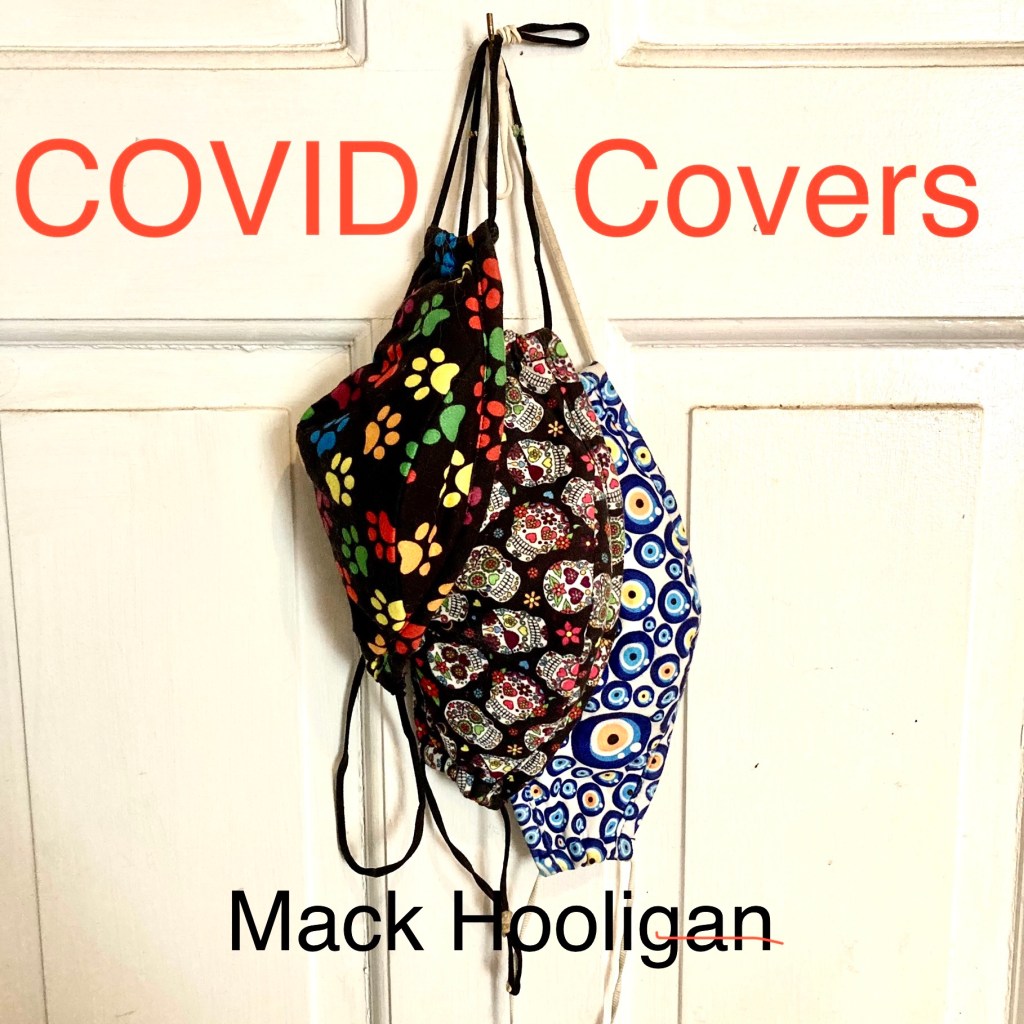
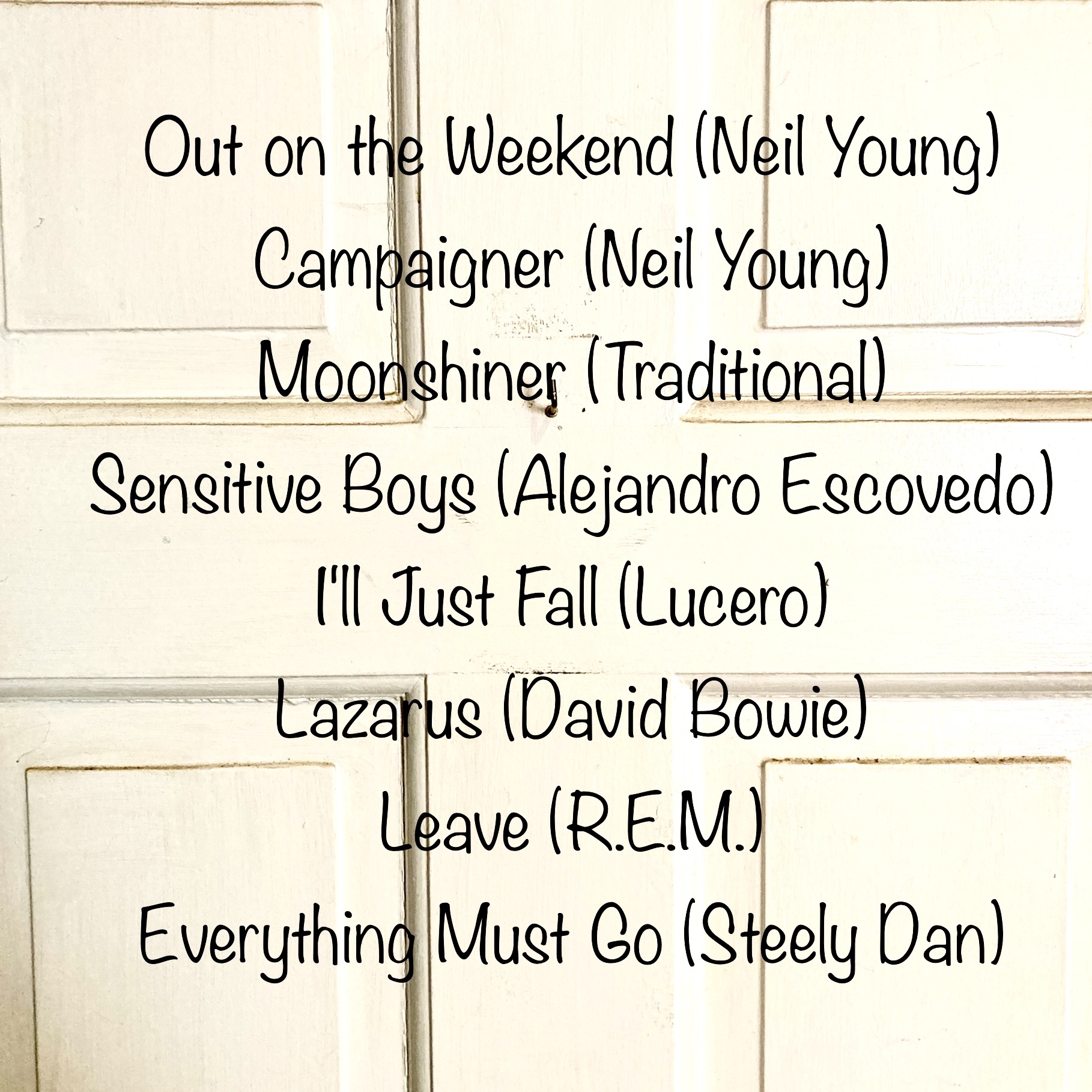
Since I wasn’t able to perform much in 2021 due to COVID, I decided to hone my musicianship — with particular emphasis on developing my skills on drums, bass and lap steel — and dive deeper into digital recording technologies by tackling some cover songs by a few of my favorite artists. The result is an oddly eclectic and sometimes uneven collection of recordings, but one that I really enjoyed developing. I’m sharing them to document the learning process, with all its highs and lows, and in the hope that you find a few tidbits that delight and/or surprise.
Below are links to the audio files. They will open in the web-based version of Dropbox, where you can either download them or listen to them using the Dropbox audio player. You can also right-click and select “Download linked file” to download it directly without opening Dropbox.
If you want me to send you a ZIP file containing the whole bunch, just let me know.
A NOTE ON COPYRIGHT AND ROYALTY ISSUES
I’m not violating any copyright laws by sharing these recordings since I’m not releasing them publicly via any streaming sites or other formal distribution methods (e.g., CDs) and most importantly I’m not selling them. To help me maintain their “fair use” status, please don’t circulate or sell these files in any way — if you do so I could get tracked down by the royalty police! ;^>
For more info on these tunes, like why I chose them and what went into my arrangements & approaches to recording them, just scroll down past the song links.
“Out on the Weekend” (Neil Young)
I have a bit of a love-hate relationship with Neil Young. While I’ve performed several of his tunes since I was a teenager (when I played his triple-album Decade obsessively), I find a lot of his later work pretty ragged and not at all glorious, if you get the reference. Plus I can’t stand his voice. So when people tell me, thinking it’s a compliment, that I sound “just like him,” I’m not too pleased to hear it.
You can’t deny that Young is a prolific and interesting — by which I mean, quirky in a compelling way — songwriter. “Out on the Weekend” is a bouncy number that leads off his 1972 breakthrough album, Harvest, while “Campaigner” is an unexpected low-key dirge that he snuck onto the aforementioned Decade compilation. I followed Young’s lead on both songs by recording “Out on the Weekend” with full guitars, drums, bass and lap steel, and “Campaigner” in one lo-fi take with just guitar and vocals.
I discovered this tune through Uncle Tupelo’s awesome version of it, and then learned that it’s been covered by TONS of people over the years, including Delia Murphy, The Clancy Brothers, Bob Dylan, Elliot Smith, Cat Power and many others. Its author is unknown, and some people claim it was originally an Irish tune that was transported to Appalachia while others claim the exact opposite. The first known recording of it, by the Combs family of Kentucky, was featured on the poet Carl Sandberg’s 1927 collection The American Songbag, crediting its minor key arrangement to Alfred George Wathall.
I followed Uncle Tupelo’s lead for the most part by starting out acoustic and then adding drums, bass and electric guitars later on to ramp things up. I stuck a long reverb effect on the harmonica to make it sound like I was playing it in a deep dark cavern. I’m especially pleased with how the bridge’s dueling harmonica and electric guitar lines came out. The slide I played on a dobro guitar towards the end seems like the right touch for this gloomy, mortality-conscious tune.
“Sensitive Boys” (Alejandro Escovedo)
I’ve always loved Alejandro Escovedo’s songwriting and was thrilled when I got to see him play with his band at a smallish bar in Nashville for the 2019 AmericanaFest. He co-wrote this one with another favorite songwriter of mine, Chuck Prophet, who was briefly a member of Escovedo’s touring band at the time, which was named — appropriately enough — The Sensitive Boys.
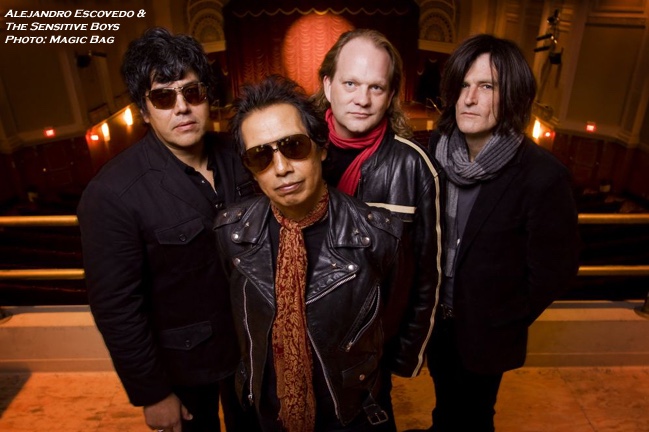
I kept things mostly simple on this arrangement too, though I added some echo, reverb and fuzz effects to the electric guitars to give the song a bit more texture. I also threw in a synthesized Hammond B-3 organ and some orchestral strings (also synthetic) towards the end. Unfortunately the drums are off in a few places (like at the start), but I’m mostly pleased how with this recording of Escovedo’s lovely tune turned out.
If you know me well you probably know what a huge fan I am of the Memphis-based Americana band Lucero. Their main songwriter, Ben Nichols, writes tunes that are about as earthy and heartfelt — yet sneakily literary — as you can get. I loved “I’ll Just Fall” from the first time I heard it and have been playing it for a while now.
This arrangement is also about as simple as it gets: just me singing along with my Gibson J-45 rhythm guitar and an over-dubbed acoustic lead guitar. I recorded it on a whim one day using the GarageBand app on my iPad, intending to use it as a scratch track for a more full-blown recording later on. But I like the feel of this “demo” version so much that I’m including it here, background static and all.
Talk about moving to the other end of the spectrum! For this David Bowie tune (one of the last ones he released before he died) I went whole-hog on the instrumentation and effects, including everything from an Op-amp fuzz pedal on the lead guitar, to a chorusy echo effect on the rhythm guitar, to several effects and filters on the lap steel guitar. There’s a programmed drum pattern for the opening and ending, live acoustic drums for the rest, and some synthesized organ lines in lieu of Bowie’s amazing saxophone playing on his original version.
Obviously I was going for a dramatic, multi-layered, almost orchestral feel on this one. Doing that while maintaining the tune’s driving, emotional intensity was a real challenge, but I think I mostly managed to pull it off. I love how the bottom sort of drops out at the end, bringing the listener to the brink of non-existence. I’m REALLY happy with how this one came out — and my drum teacher was too!
This is a lesser-known R.E.M. tune off their late, under-appreciated album New Adventures in Hi-Fi. It’s a desperate song that calls for desperate measures recording-wise, to capture Michael Stipe’s “it’s the end of the world and I like it” gloom-and-doom lyrics. Seriously: in the refrain Stipe sings yearningly about how much he wants to “leave it all behind” — can you get any more depressed than that?
And yet, the song is a head-on rocker, musically. I decided to “go big” on this one too, by layering multiple fuzzed-out guitars and featuring a loop that I created by applying a reverse reverb to a simple acoustic guitar riff. I also employed the 80s production trick of adding lots of reverb and adjusting the EQ to accentuate the low-end, thereby making the drums sound huge in the mix. Even if you have no idea what those technical details mean, I hope you like the end product as much as I do.
“Everything Must Go” (Steely Dan)
Last but not least and most challenging of all for a variety of reasons, is this Steely Dan tune, the title track off their final studio album. For this one I really had to up my musicianship in order to play the Dan’s complicated jazz chords, utilize a wah-wah pedal for the rhythm guitar, and master those funky bass lines. And the vocal phrasing…. how could I possibly capture Donald Fagan’s incomparably tongue-in-cheek delivery on this one?
I think I did an OK but not great job on the vocals, after cutting & pasting snippets from a million different takes. I’m more happy with some of the fun details I snuck in, like the synthesized organ riffs, megaphoned backing vocals, sleigh bells and triangle taps, to give the tune a cheerfully off-kilter vibe. I think my version respects the overall feel of the original while adding a bit of extra flavoring. I’d love to know what you think of it!
My drum teacher, Dave Indivero, suggested I learn this tune for one of my lessons. I liked it so much that I decided to record a full version with guitars, bass, backing vocals, etc. I’m pretty happy with how it all worked out, so I figured I’d include it here as a bonus track. Enjoy!
Thanks so much for listening. I hope you enjoy these home basement-recorded efforts of mine. If nothing else, they kept me from going completely nuts during the Great COVID Depression of 2021.
Hope to see you soon!
“Brutal Irony” is my response to the current world situation, with the planet being locked down due to the coronavirus (COVID-19). Even though it’s just a demo, I’m particularly proud of this recording because I not only sang and played all the instruments on it, but also recorded it and mixed it myself.
When I shared it with some friends, one said it has “a real Tom Petty vibe to it,” while another noted that the doubled vocal parts have a Donald Fagen (of Steely Dan) quality to them. A third said it reminded him of Neil Young — but he always says that about my tunes!
I’m curious: What influences (songs or artists) do YOU hear in it? Thanks for listening!
The title song from my upcoming EP, “Bullet With Your Name on It,” is now available on several digital platforms as well as on my Bandcamp page.

See this Distrokid landing page for links to “Bonesaw” on iTunes, Spotify, Apple Music and several other digital platforms. More background on this song, as well as an analysis of seven different types of political songs by Philly-based songwriters, can be found on my recent blog post “The Political Song: Seven Approaches.”

As published in Americana Highways on July 28, 2019
If laughter is the best medicine and music soothes the soul while taming the savage beast, we could use more Shinyribs in our lives right now.
Luckily, that joyful, Austin-based “psycho-active gulf coast funk ʼn soul” outfit (to quote their motto from an old t-shirt design) has got that medicine and brings it once again on the delightfully upbeat and at times downright silly Fog & Bling, their latest release (June 14th) from Mustard Lid Records.
The goofy, infectious fun begins right from the start with the R & B tune “Sing It Right,” wherein Mr. Shinyribs himself (Kevin “Kev” Russell, aka, the former frontman for The Gourds) intones the songʼs preamble in a nasally, muted police dispatcher voice: “Breaker 1-9… we got a big ʼol country boy down on I-10 East… Says heʼs a singer for a band… called Shinyribs!”
As the band cranks up the beat, Russell proceeds to lay down the rules for doing what the songʼs title says:
Sing it right, try to keep it in time
Oh, sing it right, do not walk on my rhyme
Know all the words and the way that they feel
Oh, sing it right, make it roll, make it real
Buoyed by longtime drummer Keith Langfordʼs solid timekeeping and Jeff Brownʼs funky basslines, and aided & abetted by Winfield Cheekʼs keyboards along with the tasty riffs of the Tijuana Trainwreck Horns (Tiger Anaya and Mark Wilson) and the sassily soulful backing vocals of Kelley Mickwee and Alice Spencer (aka, The Shiny Soul Sisters), Russell exhorts the would-be singer to
Try to transcend the song, but keep the beat where it belongs
It donʼt last long, so
Sing it right in the night, when the lights are all down
Sing it right, keep it tight, like a kite come unwound
That last line aptly captures the slightly unmoored, free-spirited precision of the album as a whole. In contrast to 2017ʼs solid I Got Your Medicine, which features some stellar songwriting but seems slightly subdued at times (at least in contrast to the bandʼs hyper-lively onstage presence), Fog & Bling comes across like a hopped-up, horn-tooting dance party teetering on the edge of all-out delirium. In that respect it nicely captures the kinetic energy of the bandʼs live shows, complete with Russellʼs arsenal of goofball moans, groans, a-haʼs, oh-noʼs, gurgling yawps and other forms of rhythmic breath-gymnastics. (If only it could capture his nimble dance moves!) Itʼs those interjections, along with the quick song transitions and spontaneous sounding vocal takes that kick Fog & Bling up a notch from its solid predecessor.
Among Fog & Blingʼs highlights are the jaunty “Iʼm Clean,” with its knowingly ludicrous similes (“Clean as a preacherʼs socks / Clean as the keys to the prisonʼs locks / Clean as a gin drink on the rocks”); the ultra-catchy “Hoods of Cars,” which celebrates the lazy times “we let slip slowly away / Following jewels in the tar, layinʼ on the hoods of cars,” noting how “It ainʼt ever in the movies, more taboo than boobies / Baby thatʼs how it feels”; and the rocking paean to friendships cemented via the crazy hardships shared by touring bands, “The Good Times and the Bad.” The surreal ups and downs of life on the road are perfectly captured by that songʼs final verses:
Stayed home in droves for a must-see band
Spent the night in a taco stand
At least it was warm
I could stretch my legs
Woke up next morning smelled like eggs
Roof of the van in the starlight
Still high from the show that night
Driving home something wasnʼt right
Flat tire, no spare.
And then thereʼs the irresistable “Got Sum,” with its jokingly jealous lamentations about how:
They all got money
They all got booty
They all got all that they want
The way they flaunt it
It just haunts me
There oughta be a law
…Everybody got sum, but I ainʼt got none!
The confessional, zeitgeist-summarizing “Crazy Lonely” is another type of lament altogether, with its incisive observations on the deep loneliness that undercuts our social media obsessed age:
I feel like a failure
most of the time
So many dreams
have died on the vine
When weʼre together
we just sit there and stare
At our phones glowing
and we ainʼt even there
For my money, though, the true standouts on this album full of shiny nuggets are the radically contrasting “Highway of Diamonds” — the one slow ballad on the album — and the giddy come-on of a closer, “Doing It With You.” Along with its sweetly high-lonesome chorus, the former features such beautifully evocative lyrics as
Laughed at and left out, sold into self-doubt
Wallflowers grow wild with time
Now nights filled with jewels, city glow & vines…
Highway of diamonds, hereʼs to the shy ones
Under the stars, like rivers we run
“Doing It,” on the other hand, finds Russell bouncing between crooning suggestively to his lady love and laughing at the faux sauvity of his insinuations:
Oooh-wee baby, whereʼd you find
that sense of humor
and that filthy mind?
Now letʼs get together,
you and me
I need a date — canʼt wait
Maybe 2 or 3
The song gets sillier as it goes, culminating in howlers like “I got no scruples / You can tell Iʼm in love / Take a look at my pupils.” Itʼs impossible to resist the “Iʼm high and I canʼt lie” vibe of the tuneʼs bouncing chorus:
If you wanna party, Iʼll party with ya
Ya wanna be tardy, Iʼll be tardy too
Ya wanna get drunk
Well Iʼll get drunk with ya
Stumblinʼ in the park after dark
Well, you know what to do
The live snippet the band tucks onto the albumʼs end — which sounds like a surreptitiously recorded excerpt from a particularly high-spirited band practice — plants a lampshade-style cap on the albumʼs carefree vibe. As the band bumps and grinds away disco-style, Russell comedically improvises the lyrics. “This is called ʼLoosen Up,ʼ” he laughs:
You gotta loosen up,
Loosen up, movinʼ up,
Booze it up, loosen up… Yea-ahh!
He continues riffing on the title a la Richard Simmons exhorting an aerobics classʼs attendees to keep their cardio rates up, until the band falls back into a slow crawl and Russell ad libs, “Laser wash… laser wash, itʼs a laser wash / Put the ky-bosh on your laser wash — itʼs all closed down!” Then as the band abruptly stops, Russell delivers the coup de grace with a deadpanned, deflationary quip: “Letʼs go get some tacos.” Itʼs a comedically perfect ending to this expertly loosey-goosey, joy inducing gem of an album.
__________
Music, videos, merch and tour dates can be found at shinyribs.org .

As published in Americana Highways on June 17, 2019
You know what’s really satisfying? When a young band that you’ve been crowing about for years hits its stride and releases an absolute masterpiece of an album — THAT’s what.
Denver’s hard-rocking roots/punk/Americana outfit The Yawpers released just such an album on April 19th, and I am SO digging it. It’s the album I was hoping they’d eventually make: one that foregrounds and consolidates all their strengths, while at the same time adding some intriguing new elements.
Human Question strikes paydirt — or perhaps rather, roots rockabilly gold — on all those fronts. It really doesn’t matter what label you throw at it,1 : this is just a fine, invigorating, fully satisfying album by one of the most promising bands that’s come around in a long time.
What makes Human Question so great? Though The Yawpers’ sonic approach hasn’t changed radically, they’ve added some new textures and wrinkles that deepen and fill out their sound. I’m always put in mind by The Yawpers’ tunes of the Pixies’ compositional approach — as captured in the title of their fascinating reunion tour documentary, “Loud Quiet Loud” — which was later copied by Nirvana and a whole host of indie and grunge bands. Like those earlier bands, The Yawpers are masters of the startling, let’s-turn-this- thing-on-a-dime dynamic shift. It lends their songs a dangerous, unpredictable edge that adds to the band’s thrilling intensity.
And yet: Cook doesn’t let out one of his trademark bloodcurdling screams on this album for 17:31 minutes. (Such admirable restraint!) His first, fully articulated yawp — not counting a few moans and modest hollers sprinkled into the prior songs — doesn’t arrive until 2:56 minutes into the poundingly cathartic “Earn Your Heaven” — shortly after he comedically announces, “Ladies and gentlemen, I wanna welcome to the crucifix, Mr. Harry Connick Jr.” (!!!).
Cook’s yawps seem less “barbaric” than primally purgative (think scream therapy or a painful exorcism) on Human Question, however. Or perhaps that’s what those bloodcurdling screams were always aimed it? It’s possible that Human Question’s unflinching focus on mortality and loss just highlights that intent more effectively.
Supporting the primal quality of Nate’s emotively deck-clearing vocals are guitarist Jesse Parmet’s slide and lead guitar contributions, which dance, dazzle and weave in and out of the mix in intense yet consistently tactful ways. New drummer Alex Koshak’s playing is steady and unobtrusive for the most part, though he provides some primitive tom-tom accents on “Dancing on My Knees” and absolutely explodes on the rootsy “Earn Your Heaven” and the hard-rocking “Forgiveness Through Pain.”
One sonic element introduced on this album that I hadn’t noticed before in The Yawpers’ catalogue is the layered backing vocals on “Reason to Believe.” But oh, that raw guitar solo by Parmet! We’ve certainly heard that before, but the sonic richness of Human Question makes its rawness stand out all the more.
And then there are the contributions of engineer/mixer Alex Hall, including some tasty Wurlitzer on “Earn Your Heaven,” piano on “Carry Me,” and even a bit of vibraphone on “Can’t Wait” and “Where The Winters End.” The keyboard touches add tasteful new textures and moods to the songs just where they’re needed.
This album sounds WAY bigger than Capon Crusade (The Yawpers’ debut) or American Man (their standout 2015 release), whose sound was pretty huge to begin with. Human Question takes the band’s sense of intensity and urgency to a whole other level, however — and appropriately, given the album’s big ambitions.
It also sounds refreshingly organic and immediate, unlike their previous release, the meticulously plotted concept album A Boy in A Well. According to their label, The Yawpers set out to create “a contrasting immediacy” on the new album and accordingly took a more basic, live approach to the recording process: The album was written, rehearsed and recorded over a two-month period with Reliable Recordings’ Alex Hall (Cactus Blossoms, JD McPherson) at Chicago’s renowned Electrical Audio. The band tracked live in one room, feeding off the collective energy and adding few overdubs. Through the new approach, 10 songs connect with an organically linked attitude and style.
Underpinning it all, however, is frontman/lyricist/guitarist Nate Cook’s focused and thematically cohesive songwriting. Cook’s lyrics have always been uniquely literate, fearless and impassioned, but they take a huge leap forward on this LP in terms of both their poetic suggestiveness and universality. “Child of Mercy,” for example, opens the album with a blistering, full-frontal guitar attack, but at its core is an impassioned plea for salvation from loss and brokenness:
Little child of mercy I’m living in a quiet room Blind to every reminder that everything goes too soon Please wake me up when the night is over When it’s safe to come outside
The protagonist’s despair seems raw, genuine and not at all hyperbolic, as Cook’s lyrics perfectly evoke the emptiness of abandonment:
All the shades are drawn Wires on the walls All the furniture’s gone Please, give me something that I can believe in Something that takes it away
A lesser writer would hint at or inch toward a hopeful ending, but Cook avoids that tempting deus ex machina approach, ending the tune on an even more bereft note:
Little child of mercy I guess maybe the angels are deaf To the wants and needs of the weary To the chronically bereft I’m lying down in my broken home Like a child again
The album’s centerpiece, “Carry Me,” is a similarly mournful, loss-driven tune, though it doesn’t stop at the simple expression of despair. The song’s insistent pleading — “Please, I need my lover’s hands / To dance on my skin / To harvest my garden / Won’t you let me suffer your touch?” — grows and expands until Cook commences screeching and the dark wail of an saxophone unexpectedly breaks in. In contrast to the opening track, “Carry Me” does in fact arrive at a kind of consoling closure, though its admittedly being based on a lie undercuts that consolation:
Won’t you take me into your arms, if only for a moment And carry me Lie to me as a little mercy Lie to me, it’s all I need Tell me you love me, in this moment And you’ll carry me through
It’s an audacious, rug-pulling ending that underscores the song’s painfully desperate yet fully self-aware expression of emotional neediness.
Both the title track and “Man as Ghost” address loss as well, taking similar though crucially different trajectories. The former projects a weighty, funereal tone in its questioning of the ultimate meaning of human existence:
Can there ever be an answer? Such an elegant fear Each conviction feels so fluid Every effigy fades No priests, no guides, no fathers Where the body is laid What is this human question?
The song’s restrained, melancholic feel is accentuated by Parmet’s droning slide guitar and the high-in-the-mix (and thus exotic sounding, in this context) shakers, until Hall’s piano and vibraphone suddenly break in at the 2:38 mark. The last verse ponders whether mourning rituals can ever be truly effectual, given the undeniable fact of loss’s permanence:
Traveling up the mountain Past the Catherine Wheel The only children see where The body’s revealed There is no hesitation How do we mourn, how do we mourn?
The song’s final lines present a conundrum, rather than providing resolution or redemption:
As the silence fills our heads There’s so much time now to forget Sound that comforts and destroys what we needed from the noise
“Man As Ghost” provides a short but effective coda to “Human Question” (the song’s) ruminations. Again, the lyrics are at once searching and definitive in their assertion of irredeemable loss and homelessness:
I’m a ghost This is a vicious world of poor design I’ll build one of my own I’ll make Jerusalem, Arcadia, or Meropis Because I have no home
As with the prior song, the final verse further complicates the mystery of (lost) consolation, “taking ownership” of the distance the protagonist has both crossed and created.
I’ve always been a visitor but you were such a quiet place to breathe I saw you as a vision, where the hungry go to feed I’m a ghost, in a world of loss In my memories you’re next to me A limbless jury and my host I’m finally taking ownership, I’m a better lover as a ghost
That such haunted, pensive songs as “Child of Mercy,” “Human Question,” “Man As Ghost” and “Carry On” could be interwoven with driving, intense rockers like “Dancing on My Knees,” “Earn Your Heaven” and “Forgiveness Through Pain,” with the tight weave of contrasting threads resulting in a seamless, unified tapestry, testifies both to The Yawpers’ growing virtuosity and their singularity of purpose on Human Question.
The album’s last three tunes trace a kind of arc that reflects just how far The Yawpers have come in their relatively brief career. ”Forgiveness Through Pain” is probably the most quintessentially Yawpers-ish song on the album. It has all of their hallmark stylistic elements: the pounding drums; the thrashing, dirty guitar tones; the spittle-flecked vocals and sudden, high-intensity breakdowns, all built on that grungey loud-quiet-loud template. You can almost see the veins bulging from Cook’s neck and face as sputters on in rapid-fire fashion about the Grim Reaper:
His prophecies all speak about you From his dark bench in the yard The leaves all fall around him, and he passes without a word
He’s a collector of all that you’ve lost All the things you’ve left behind All of the things that you thought that you’d see But instead they just rendered you blind
Bring out your finest champagne Nothing to lose or to contain He’s not a friend, but he’s here until the end And to teach you forgiveness through pain
“Can’t Wait,” on the other hand, is a horse of a completely different color. With its Tom Pettyish pop stylings, it’s the most radio-friendly song on the album as well its most hopeful-sounding — though (again) the lyrics belie that impression:
I’ve been looking for some comfort in this world that’s escaping me I’ve been riding these bannisters for weeks I’ve been chasing you through the dirty sheets I’ve been waiting for the lights to go out on me
Though its title and sunny, chimey guitars bear a family resemblance to The Replacements’ “Can’t Hardly Wait,” The Yawpers’ tune takes the title’s professed eagerness in a very different, quite possibly morbid direction at the end: “I’ve been waiting for the lights to go out on me… I can’t wait!”
At the resting point of this musical arc is “Where the Winters End,” a mellow song of exhortation a la Dylan’s “Forever Young” or Bob Marley’s “Redemption Song”; taken with “Child of Mercy,” it effectively bookends the album with two tunes marked by prayerful supplication. The repeated incantation “May you… [fill in the blank]” functions at first exactly as it does on the Dylan tune:
May your seasons find their end May your crowns change on your head May you learn to walk with the dead, And feel the living hand in kind May your mouth find every word May your ecstasies be heard May you always continue to burn, And to warm the ones you need
Naturally we’re guessing the song will continue this invocation of blessings, and for a while it caters to that expectation:
May my voice continue to rise May my arrow find ever lie May I never avert my eyes And find comfort in the dark
Cook has no interest in following the formula by resolving things along pleasantly uplifting lines, however. Instead, he introduces a note of wariness that casts a shadow of doubt on the sincerity of the prior verses’ invocations:
Take me to the place where the winters stop Where I held your hand, and locked away love It’s wet and warm and hidden in the leaves
I know you wouldn’t want it left beneath When we were young, it sheltered my belief I know we only left it there for us But we’re getting older… we’re getting older now
“But we’re getting older,” indeed. And perhaps stronger, and maybe even wiser, the ending — coupled with the bouncey melody and breezy arrangement — implies. But then again, perhaps not. It’s a brilliant, powerful closing to the album that resists buying into false promises of closure and consolation, while acknowledging nevertheless the all-too-human necessity of mourning one’s losses.
It’s also, and above all, clear confirmation that Nate Cook and company have come fully and decisively into their own.
__________
Human Question is available on CD and vinyl from Bloodshot Records here: https://www.bloodshotrecords.com/album/human-question
Download links as well as tour dates and biographical info can be found at: http://www.theyawpers.com
___________________________
1 Their label, Bloodshot Records, describes their sound as “a front-heavy, groovy, fire & brimstone punk-blues overlying a dynamic and metaphysical roots rock.” Uh-huh.

As published in Americana Highways on May 2, 2019
Unbeknownst to many, the Gloria Dei (aka, Old Swedes’) Episcopalian Church in the historic Queen Village area of Philadelphia has been home to a burgeoning Americana-centered music scene. Fostered by the church’s on- site Sexton, Jim Minacci, and his wife Paula, their Sexton Sideshow collaborative has been welcoming up-and-coming as well as established singer-songwriters and bands to their monthly musical Sunday brunches and related events for almost a decade.
During these collegial brunches, the musicians take turns performing for each other while their cohorts chow down on pancakes, pastries and scrambled eggs; when not performing or eating, they’re free to supply helpful feedback, forge new musical alliances and simply enjoy the camaraderie of fellow artists.
Later this month the Minaccis will be hosting their 8th annual Memorial Day music fest and family picnic, which typically runs all day in the church’s adjoining walled-in yard. (The schedule for this year’s festival can be found at https://www.facebook.com/SextonSideshow/ .) Jim has also curated Wednesday night Live Local shows and Vinyl Nights at the nearby Irish bar For Pete’s Sake for the past several years, along with all-day Make Music Philly events in the church sanctuary.
The Minaccis do all this because they love live local music (not just Americana and roots music, but pop-rock, rap, and folk as well) and because they know how game-changing it can be for musicians to feel that they are part of a caring, supportive community. As the Sexton Sideshow Facebook page puts it: “Our hope and mission for Sexton Sideshow is to bring our community together in a safe place to enjoy incredible homegrown music, delicious food and to interact with the community and build fellowship.”
’Tis a beautiful and wondrous thing, this community they’ve nurtured, and the Philadelphia music scene has been the lucky beneficiary of the Minaccis’ stewardship. Over the years the Minacci collective has helped launch and/or support such notable Philly-area bands as Cowmuddy, John Faye & Those Meddling Kids, John Train, Hannah Taylor & the Rekardo Lee Trio, Hurricane Hoss, LadyFingers, Low Cut Connie, Macadocious, No Good Sister, Pawnshop Roses, Sweetbriar Rose, The River Bones and Uke Ellington, as well as individual artists like Mike “Slow-Mo” Brenner, T.C. Cole, Jessica Grae, Marion Halliday, Every Heard, Kuf Knotz, Julia Levitina, Shakey Lyman, the Revr’end TJ McGlinchy, Andrea Nardello, Ben O’Neill, Morgan Pinkstone, Sara B Simpson, and many, many others.1
One of the best known and at this point longest-tenured bands to spring from the fertile grounds of Gloria Dei is The Midnight Singers, formerly known as The North Lawrence Midnight Singers. Centered on acoustic guitarist/vocalist Jamie Olson, who also pens the lyrics for most of the band’s songs, lead guitar player and supporting vocalist Todd Zamostien, and bassist/vocalist Nick Mazzuca, the Singers have been a fixture in the Minaccis’ extended musical family in one form or another for the past decade or so. Along with their full band appearances, Olson has played solo at Gloria Dei many times, while Zamostien has played under the moniker Bastards of Earle, his solo side project.
The Singers’ 2010 sophomore release, Last Great Saturday Night, was named the #1 Local Album by readers of radio station XPN’s local music-focused website The Key, but they’ve released just one EP since then. Their third and latest full album, Nowhere Else, sees them honing their rootsy, Jayhawks and Gram Parsons-infused sound while further extending their already wide circle of contributing players. Reflecting the community-minded ethos of the Minaccis, the insert for the vinyl version of the album features a photo-collage of the “great SINGERS community” (aka, the record’s contributors), that includes no fewer than 23 individual musicians and engineers.
Clearly, the Singers embrace the “it takes a village” approach to music- making. As a result, Nowhere Else’s eight tunes feel packed to the gills with goodness.
Olson’s lyrics are simple and direct but abundantly hooky, and the hummable, airy melodies afford the band members — particularly guitar tone-master Zamostien — ample room to add a constant but varying stream of sonic supplements, whether in the form of effects-pedal tones, layered vocal harmonies, or rhythmic shifts and stops. Longtime drummer and local session musician Cornelius Simpkins anchors the album masterfully with his solid and subtly dynamic timekeeping.
A perfect example of this winning blend can be found ultra ear-wormy “California,” in which the singer begs a friend to “tell me all you know about California” since “this here east is killing me.” “Could it be that little slice of heaven for me?” the protagonist wonders; “train runnin’ thru my head / won’t let me rest / all aboard headin’ west / I wanna smile like you.”
It’s a simple song about a common desire: to find a better, happier place to live. While Olson’s yearning vocals — whose timbre resembles that of former Jayhawk Mark Olson (no relation) — paint that picture, the band adds some flangey guitar vibes, a loping bass line, some organ flavoring, sweet vocal harmonies, and a steadily thumping drum line. It’s a 4:07 minute masterpiece of sonic evocativeness.
Other highlights include “Hey Pilot,” with its gripping tale of a passenger’s worried concern about a pilot’s desperate, possibly suicidal state of mind; the rootsy “Fine Dust,” with its greasy slide guitar accents, cool stops, and bumpin’ bass line; the bouncy, impossibly catchy “Rabbit on the Run”; and the album’s alternately rockin’ and delicate closer, “Mother of Mercy.”
Though I’ve singled those five tracks out, all eight of the album’s cuts are strong — there’s not a lemon in the bunch — and together they create a pleasantly diverse yet tightly coherent musical tapestry. If you’re in the mood for some simple but affecting lyricism, climbing vocal harmonies, super-solid ensemble playing, and alternately chimey, twangy and trebly guitar tones, I heartily recommend this latest effort from one of Philly’s best Americana/roots outfits.
And if you’re ever in town, make sure you check out one of the many Sexton Sideshow-sponsored musical events at Gloria Dei. Don’t forget to thank the Minaccis for all the great local music they’ve been incubating.
_________
More info on the Midnight Singers can be found at: https://www.facebook.com/ midnightsingers/
The album Nowhere Else, along with their EP Rockin’ the Neighborhood and Last Great Saturday Night (as The North Lawrence Midnight Singers) can be found on iTunes and other streaming services.
_________
1 Some other great Philadelphia-area Americana acts that haven’t been directly involved in the Minaccis’ downtown community but that also reflect the Philly area’s vibrant Americana/Roots scene include The Wissahicken Boys, The Twenty-Niners, Hezekiah Jones, Wheelhouse, Slowey & the Boats, Sparklepony, The Miners, Cavan Curren, and a bit further south (in and around Wilmington, DE), Michael Davis’s long-running rockabilly band The Bullets, The Quixote Project and Couple Days. And that’s just the acts I am personally acquainted with; there are doubtless many others equally worthy of mention.
I would be remiss not to mention also Philly’s vibrant and long-running folk scene, centered around the Philadelphia Folk Festival, which is going on its 58th year now.

As published in Americana Highways on March 22, 2019
While plenty of bands have mixed bits of hard rock or punk flavoring into their Americana / Alt Country sound — Whiskeytown, the Waco Brothers, Old 97s and Uncle Tupelo all come quickly to mind — few have completely changed course and jumped directly from rock’s basic aesthetic, with its three-chords- and-some-angst sonic palette, to the more musically challenging and nuanced genre of bluegrass. But that’s essentially what the defiantly named Who? What? When? Why? & Werewolves? did in evolving from long-time Philadelphia rockers The Tressles into their current form as the 6W’s.
Not that their cheekily-named debut album Greatest Hits, to be released on March 29, doesn’t have a punkish attitude of its own. The band’s obscure, intentionally unwieldy name indicates right up front that it doesn’t give a fuck about what Music Row thinks. As band leader and songwriter Andrew Fullerton explains regarding the album’s impetus: “I think you get to a certain point in your life, and you really have to ask yourself what you’re making music for. With the state of the music industry being what it is, there’s not much point in making a record unless you feel really driven to create something.”
Hence, their website explains, 6W’s intention on this album is to “celebrate making music purely for the sake of creation” while “championing the stories of everyday people trying to make their way in this crazy life.” The title Greatest Hits speaks to the band’s deliberate refusal to concern themselves with any notion of trying to produce “hits.” “As I’ve gotten older, the scope of my life has gotten narrower,” Fullerton, who works as an executive chef at a Delaware-based restaurant, explains. “I go to work, I see my family, I play in this band, and that little life, it’s perfect for me. If people don’t care about my music, it’s still good enough for me.”
As for the impetus behind the band’s radical genre change, Fullerton relates, “People would always tell me [when they were in The Tressels] ‘You write such beautiful, thoughtful lyrics, but we can’t ever hear them,’ so it was somewhat motivated by an interest in showcasing the lyrical content a bit more.” Of course, he adds with a wry laugh, “But to be honest, we just got tired of carrying so much gear around.”
Whatever the truth of that last statement, Fullerton’s literate yet earthy lyrics really do shine on Greatest Hits, along with banjo player Matt Orlando’s vocal harmonies and Pete Clark’s fiddle playing. Fullerton and Orlando have been playing music together for 15 years; their prior tenure with The Tressels — which released eight full length albums and gained a serious local reputation before calling it quits — helped them hone their vocal harmonies to the point where their seamless blending causes many listeners to mistake them for brothers. Throw in Clark’s fiddle and some nimble upright bass playing by Brian Grabski and you have all the necessary ingredients for a highly listenable yet intense, emotional brand of progressive indie-folk-bluegrass (for lack of a better term).
Mixed by Kyle Pulley and tracked by Mark Watter of Lizdelise at the Headroom in the gritty Kensington area of Philadelphia — where bands like Hop Along, Kississippi and New Jersey rockers The Pine Barons previously recorded albums — the seven song album was recorded, edited, mixed and remixed in seven days. “Kyle Pulley, the mixing engineer, was on tour with his band Thin Lips so he wasn’t present for the tracking,” Fullerton recounts. “Which was actually really interesting because he sort of re-built the songs and made them more expansive. I’ve never worked with a mixing engineer who really cared about the songs themselves [and] not just the technical/sonic template aspect of the process.”
The collection’s opening track, “Bluebird,” begins as a worried-sounding folk ballad, but takes on a wild intensity as Orlando’s banjo and backing vocals kick in behind Fullerton’s lamentation (or warning?) that “There’s a hundred thousand miles on this lemon of a heart / It’s not forever, it’s a pretty good start.” “I wouldn’t lie to you,” he assures the listener, but then the tone shifts: “I know, it surprised me too / Raise your hand and tell me about the bluebird.”
The hundred thousand miles grow to a hundred million by the next pre-chorus; the melody continues as before, but the lyrics get replaced with moaning wordless “ooooh – ooooh – ooooh’s”; the vocals rise in intensity, and suddenly the song stops at 3:05 in. It restarts with quiet guitar strumming, to which banjo, bass and fiddle are incrementally added; the mileage grows to a hundred billion; the chorus kicks in again with an even wilder intensity, and the song ends with a five-note flourish that lands it right in the lap of the album’s next tune, which commences forthwith. It’s an audacious, whirlwindy and auspicious start to the album.
That next tune, “John Blonde Sing My Eulogy,” takes things in a different direction. The banjo rolls take primacy at first, with the guitars, fiddle and a piano gradually blending in quasi-orchestrally behind them. Meanwhile Fullerton’s darkly reedy vocals confide that “It might seem grey from far away/ But it’s a white flag that I’m waiving to my enemy.” Framed by the refrain “If it’s twenty-to-one, two hundred versus two hundred / It don’t matter, I can’t remember who won,” it’s hard to tell if this song is the lament of Civil War soldier longing to breach the battle lines and head home, or the tale of a teenage runaway’s gradually dawning remorse. Either way, it’s a powerfully affecting tune.
I have to share Fullerton’s story about the source of the catchy “Rattail” — which premiered here on Americana Highways — since it’s so quintessentially Philly:
“Rattail” is about growing up awkward. More specifically it’s about my younger brother Sean and the wicked rattail mullet he had in the 90’s because he worshipped Philadelphia Phillies first baseman John Kruk. I remember our parents fighting about the fact I dyed my hair blue when I was 14. I was ashamed and embarrassed that it mattered that much to either of them. But now that seems so insignificant in my life.
The moral of the story, he summarizes, is: “Don’t be afraid to be a weirdo, have a bad haircut or be awkward. Hair grows out.” Americana Highways’ editor Melissa Clarke aptly describes this song as “a coming-of-age saga” whose “fluid banjo and easy rhythms” mate with its “lyrical confession of vulnerability” to evoke deeply “nostalgic emotions.” Having personally embraced some pretty awful hair styles over the years I can definitely relate to the song’s sentiment, as I suspect many other listeners will as well.
“Wilma” is the creepiest and darkest song on the album, and also its most memorable tune. Told from the point of view of a hardscrabble, rail-riding psycho named Cyrus who stalks the song’s namesake heroine across country, the song strikes a disturbing psychological chord. With lyrics like “Tell all your lovers you love ‘em so / Watch who you’re sleeping with cause he’s the first to go,” and “You look surprised to see my face / I know you thought you had escaped / But I’ve got a couple things that I just needed to say / Don’t you try and get away, don’t you try and get away!”, this is the dark, over-the-top stalker tune your mother warned you about. It’s obsessive, casually threatening and openly menacing by turns, in the vein of the Louvin Brothers’ “Knoxville Girl” and Matthew Sweet’s “Winona.” The melody of that rising chorus will stick with you like a bad nightmare, too — though in a good, hummable way. The mournful fiddle and click-clacking percussion provide the perfect unsettling undercurrent.
“Tell Me a Secret” conveys a similar though less threatening darkness: a darkness of the secretive soul, if you will. Fullerton describes it as “a swampy front-porch-psychedelic-gospel tune.” “We were referencing the Black Keys and The Band a lot,” he explains. “I think we found a middle ground between those two influences on this song. The song is all about little wishes we make and little secrets we keep. Quitting smoking, getting to hash it out with ‘the one that got away.’ I did actually quit smoking for real after I wrote this song.”
The short and sweet rumbler “Stacy’s in the Army” references a drag queen Fullerton and Orlando befriended after a gig who they later discovered was an officer in the US Army. “His story really struck me because I’ve never served in the military, and I don’t think I could ever do it,” Fullerton says. “But you hear over and over that the army defends your freedom, and I thought, ‘Stacy is really living that mantra. He serves his country for the right to be able to live however he wants to, and for him that means the freedom to be Stacy.’” As the song’s chorus matter-of-factly puts it: “Stacy’s in the army wearing lingerie / Don’t know what the major general’s gonna say / But he’s out there fighting for us everyday.”
“Priscilla” highlights Fullerton’s dark lyricism and rounds out the album with a fittingly mournful yet strangely upbeat vibe. “You’re down in a hole that’s big enough for two / Well I’ll follow you down if you ask me to” the song begins, and it continues in that desperate vein. “I thought about my mother’s and my father’s bills / I thought of mixing vodka with NyQuil.” “And I thought of having faith, and I thought of having patience / But kids today have no imagination,” Fullerton intones over undulating banjo and fiddle swells. Memorable lines like “Some things arrive that you just can’t take back” and “We had no instructions just a whole lot of buttons / So you had to push them all” come in a rush before the song ends with the disturbing twin couplets: “Got no desire to be the best / I just had to be your bulletproof vest / They had to take your smile and the heart from your chest / I’ll prevent them from taking the rest.” As with the rest of the collection’s tunes, there’s no lack of drama here.
Though clocking in at a short 21:50 running time, Greatest Hits is a fully satisfying collection, thanks to its rich variety of lyrical perspectives and musical textures. And though technically a “debut” album, it has — not surprisingly, given the longtime collaboration of core band members Fullerton and Orlando — the confident feel of a more mature unit’s release, though there’s also an exuberance and surprise to it. In that sense it’s the best of both worlds. At the very least, it’s proof positive that playing music for its own sake — and not giving a shit about whether anyone else likes it or not — can definitely pay off.
———
More info on the Who? What? When? Why? & Werewolves?, including tour dates, can be found at: http://6wmusic.com .
Americana Highways’ world premiere of “Rattail” can be found at: https:// americanahighways.org/2019/01/30/song-premiere-rattail-by-who-what-when- why-and-werewolves-from-upcoming-album-greatest-hits/
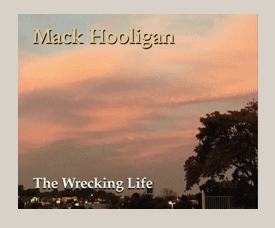
I’m delighted to share a couple of big pieces of news with y’all. The first is that as of today, two new original songs of mine that the estimable John Faye recorded, mixed and played on — and that our good buddy Cliff Hillis was kind enough to master in record time — are now available to stream and/or download on all the big distribution platforms (e.g., Amazon Music, Deezer, Google Play, iTunes and Spotify, among others). Just search for “Mack Hooligan” and they should come right up.
My previous 3-song EP “The Wrecking Life,” which was recorded, mixed, mastered and produced by Cliff Hillis in January 2017 and which features such talented musicians as John Short III (aka, “Shorty”), John Faye, Tom Curtis Jr. and Cliff, will be available on those same platforms within a few days.
The other big bit of news is that I’m headin’ down to Nashville in a couple of days to take in the 5 days of non-stop musical glory known as the AmericanaFest. I’ll be bringing branded USBs stuffed with the aforementioned songs in the hopes of hawking my songwriting talents and perhaps hooking up with some future co-writers down there.
I’m pretty excited about these next steps for my fledgling musical career. Hit me up the next time you see me at a gig or open mic and I’ll be happy to share what I learn in Nashville. Whatever happens, I’m grateful and humbled to have had these opportunities come my way, and can’t thank John Faye, Cliff and Shorty enough for helping to make them possible.

 Mack's Musings